
Compound Bow vs Recurve Bow: Power, Forgiveness, or Feel?
A compound bow's cam system lets you hold roughly a fifth of its peak weight at full draw and still hit harder downrange. A recurve bow gives none of that back — you hold the whole peak weight, tune around more archer's paradox, and take longer to get consistent. The sections below run the holding-weight math, the ballistics and the actual practice-hour data behind both, so the choice stops being a gut call.


A 70-pound compound bow at 80% let-off asks your arm to hold only about 14 pounds at full draw, while a 45-pound recurve bow gives you the entire 45 pounds back with nothing subtracted. That difference cascades through everything else in this guide: the compound bow's 400-grain arrow at roughly 328 fps produces about 96 ft-lbs of kinetic energy against the recurve's 500-grain arrow at roughly 172 fps for about 33 ft-lbs, the compound is generally faster to group tight because its sight and release remove most of the form-building work, and the recurve's off-center arrow rest makes it noticeably less forgiving of a spine mismatch. Neither bow wins outright — a recurve is lighter, simpler to maintain, and the only bow class permitted in Olympic competition. The sections below cover which tradeoff fits a given archer's body, goals, and schedule.
What Are the Key Differences Between a Compound Bow and a Recurve Bow?
The table below summarizes the practical differences covered in this guide.
| Attribute | Category Icon | Compound Bow | Recurve Bow |
|---|---|---|---|
| Holding at full draw | Cam let-off (65–90%) drops held weight sharply | Full peak weight held the entire time at anchor | |
| Modeled kinetic energy | ~96 ft-lbs (70#, 400gr arrow, 328 fps) | ~33 ft-lbs (45#, 500gr arrow, 172 fps) | |
| Archer's paradox / tuning sensitivity | Centershot rest — smaller correction needed | Off-center shelf — larger correction needed | |
| Practice time to a 5″ group at 20 yd | Roughly 15–25 hours | Roughly 40–70 hours | |
| Competition eligibility | World Archery / IFAA / NFAA compound divisions only | Only bow class eligible for Olympic archery | |
| Weight & footprint | Cams and cables typically add 0.5–1.5 lb | Lighter, no cams or cables to maintain | |
| Mechanical maintenance | Cam timing and cables drift — usually needs a bow press | Simple limb/string checks, no press typically needed |
Core Insight: Almost every difference in this comparison — power, forgiveness, learning curve and maintenance — traces back to one design choice: a compound bow's cam system banks stored energy into a "valley" you barely have to hold, where a recurve gives that energy straight back to your arm and your tuning margin. That single tradeoff is why it hits harder, holds easier, and forgives less at the bench.
Compound Bow
Ideal For: A long tree-stand or blind sit where holding at full draw matters, a hunter who wants maximum kinetic energy per pound of peak weight, and anyone who would rather tune a sight pin than fight archer's paradox by feel.
Recurve Bow
Ideal For: Olympic or traditional competition where a compound is not eligible, a lighter and simpler setup with less to maintain in the field, and archers who want the instinctive, closer-to-the-string feel that a cam system removes.
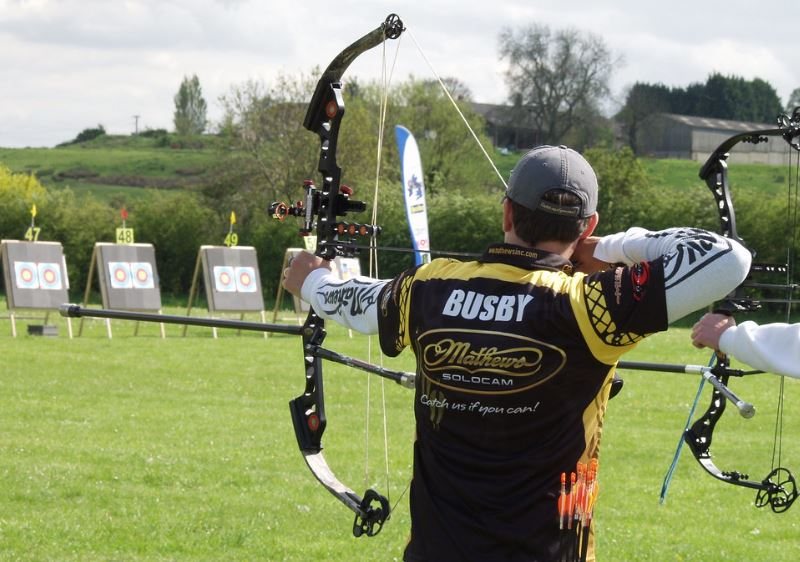
Which Bow Actually Fits Your Body, Goals, and Schedule?
Be honest about any physical limitation, pick your main goal, estimate your real practice hours, and say how much mechanical fiddling you're willing to do. The match score below weights all four the way the sections below explain.
How does the Bow Match score work?
The match score is a weighted composite, not a physics simulation: 30% physical condition (an injury that limits sustained holding weighs toward a compound's let-off), 25% primary goal (Olympic target pulls hard toward recurve since it's the only eligible class, while general hunting leans compound), 25% available practice (less practice time favors a compound's faster proficiency curve via sight and release, more open practice time makes a recurve's steeper curve less of an obstacle), and 20% mechanical tolerance (a strong preference for simple gear favors a recurve's fewer moving parts). Scores are summed and clamped to an 8–92% range so the bar never reads as a false absolute.
The eligibility flag below the bar is a hard rule, not a weighted guess: World Archery's Olympic program only accepts recurve bows, so selecting that goal always surfaces the note regardless of how the other three inputs score.
Let-Off Actually Means: What Are You Fighting at Full Draw?
A recurve bow's force-draw curve rises in roughly a straight line from brace to full draw — whatever the limbs read on a scale at anchor is exactly what your arm holds for as long as you stay drawn. A compound bow's cam system rises the same way through the first half of the draw, then rolls over a peak and drops into a flat "valley" near full draw, where the let-off percentage, as Hoyt's own equipment glossary defines it, tells you how much of that peak the cams are quietly holding for you.
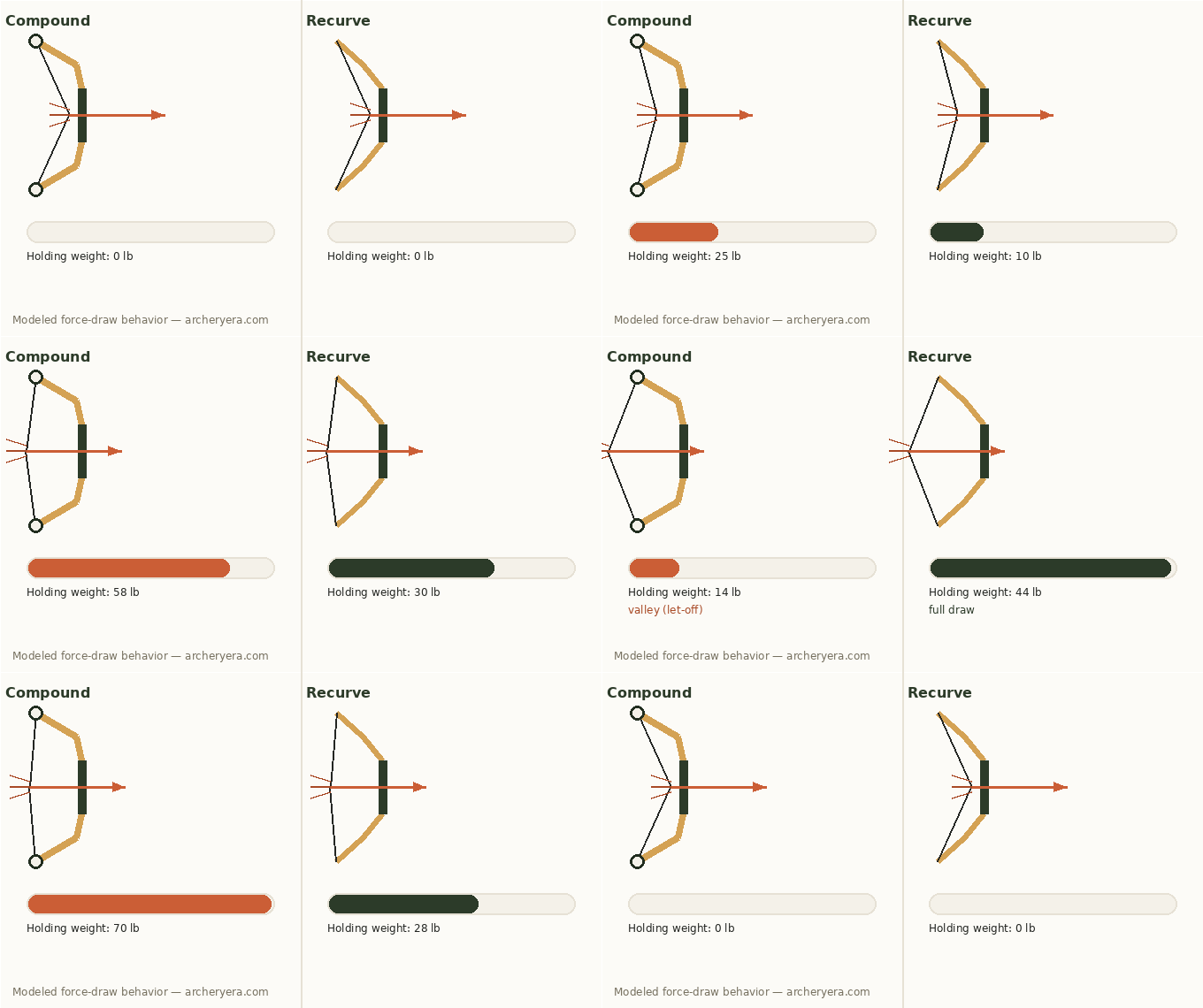
Animated, code-rendered diagram — not a photograph of an actual chronograph or force gauge. See the methodology note below the tool.
Set a peak draw weight and a compound let-off percentage. The gauges below show how much of that peak weight each bow actually asks your arm to hold at full draw, plus a modeled estimate of how long you could comfortably hold that weight before fatigue sets in.
How does the Peak vs. Holding Weight simulator work?
Holding weight: is peak weight reduced by the let-off percentage for the compound bow, and simply the full peak weight for the recurve, since a recurve has no let-off mechanism.
Holding = Peak × (1 − Let-off%)Peak and Holding in pounds · Let-off% as a decimalModeled hold time: is clamped between 4 and 180 seconds and anchored to two commonly reported reference points rather than a lab measurement: a hunting-weight recurve held around 45 pounds is widely reported to start producing noticeable arm shake after roughly 8 to 10 seconds, and a heavily let-off compound holding around 14 pounds is commonly reported as comfortable for a minute or more.
Time = 4360.5 × Holding−1.624Time in seconds · Holding in pounds · clamped to 4–180sWe could not find a peer-reviewed study measuring static bow-holding endurance specifically, so treat this as a transparent engineering proxy for planning purposes — individual strength, form and cold-weather stiffness all shift the real number.
| Peak Weight | Recurve Holding Weight | Compound @ 65% | Compound @ 75% | Compound @ 80% | Compound @ 90% |
|---|---|---|---|---|---|
| 40 lb | 40 lb | 14.0 lb | 10.0 lb | 8.0 lb | 4.0 lb |
| 50 lb | 50 lb | 17.5 lb | 12.5 lb | 10.0 lb | 5.0 lb |
| 60 lb | 60 lb | 21.0 lb | 15.0 lb | 12.0 lb | 6.0 lb |
| 70 lb | 70 lb | 24.5 lb | 17.5 lb | 14.0 lb | 7.0 lb |
| 80 lb | 80 lb | 28.0 lb | 20.0 lb | 16.0 lb | 8.0 lb |
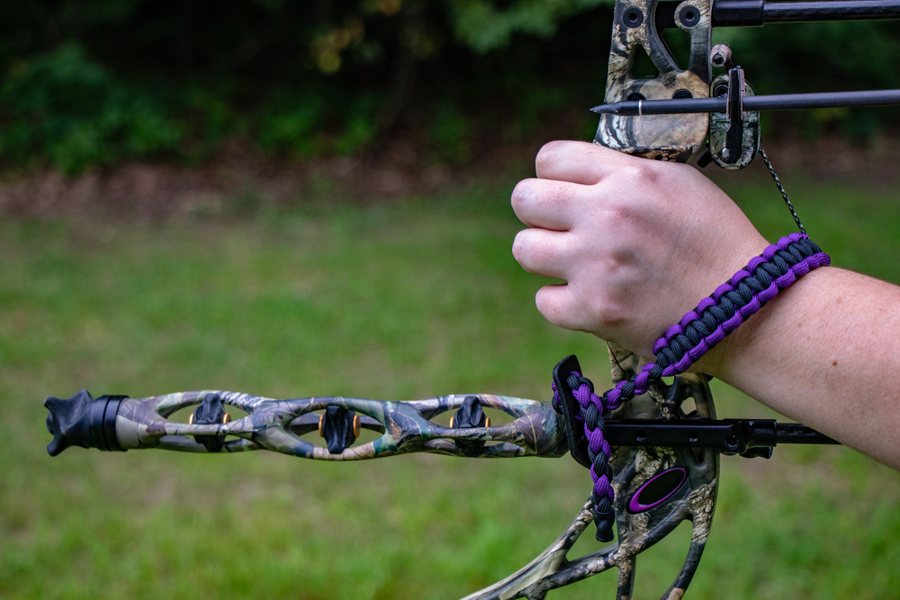
How Are a Compound's Cams and a Recurve's Limbs Actually Built Differently?
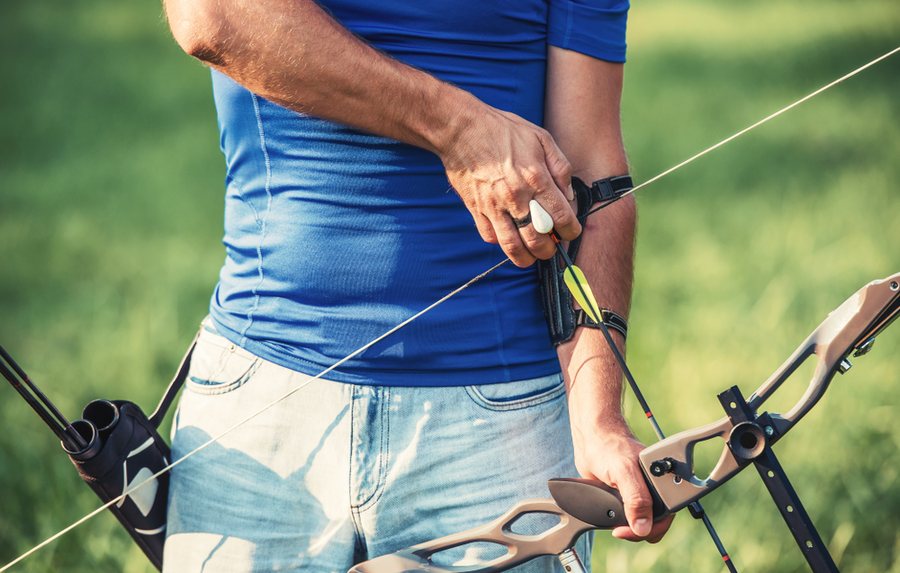
A recurve bow is mechanically simple on purpose: a riser and two limbs that flex in one plane, a single string running tip to tip, and the recurved limb tips themselves — the part that gives the bow its name — banking a little extra energy right at the end of the draw as they straighten out. Nothing rotates and nothing needs periodic timing.
A compound bow bolts a cam-and-cable system onto that same basic riser-and-limb layout. As the string comes back, the cams rotate through a changing lever arm — West Virginia University's Science Behind the Sport project breaks down the mechanics of that lever arm in more depth — which is what produces the rising-then-falling force curve from the section above. Single-cam, hybrid-cam and binary-cam systems all chase the same goal — a longer, flatter valley near full draw — through different cable routings and different tuning tradeoffs.
| Attribute | Recurve Bow | Compound Bow |
|---|---|---|
| Limb / cam system | Simple recurved limb, no cams | Single, hybrid or binary cam-and-cable system |
| Let-off | None — full peak weight held at anchor | Typically 65–90%, set by the cam module |
| Moving parts to time | None | Cam sync, cable length, string stretch |
| Typical service tool needed | Basic hand tools | Bow press for most limb/cable work |
| Typical bare-bow weight | Lighter — no cams or cables | Usually 0.5–1.5 lb heavier |
Why Is Recurve Tuning Less Forgiving Than Compound Tuning?
Every arrow has to bend around the riser as it leaves the string — a phenomenon called archer's paradox — because the arrow doesn't launch from dead center on either bow. What differs is how far off-center each design actually is. A compound bow's centershot cut and drop-away or containment rest put the arrow almost directly in line with the limbs' thrust. A recurve's shelf and cushion plunger sit noticeably further off that centerline, so the arrow has to flex through a bigger correction to fly straight.
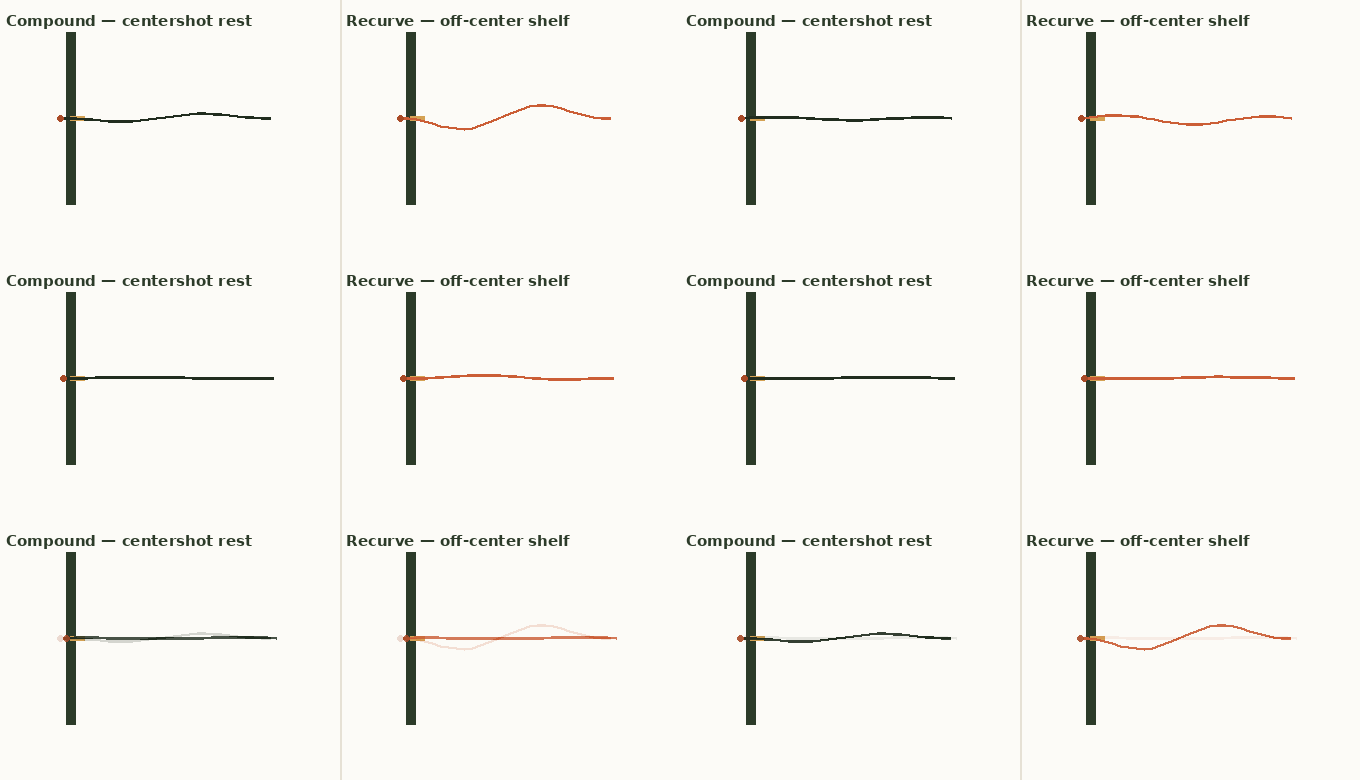
Slide the spine mismatch to see how much lateral flex correction each bow asks of the same arrow. A perfectly spined arrow still needs some correction on both bows — the gap grows fast on a recurve once the spine is off.
How is the Paradox Correction Index calculated?
This is a relative index on a 0–100 scale, not a measured inch value, clamped to 100. The base values (15 for a centershot compound rest, 62 for a recurve's off-center shelf) reflect the well-established rest-offset difference between the two designs, not a specific lab measurement of any one bow.
Index = Base × (1 + |Mismatch| ÷ 40 × 1.2)Mismatch as spine deviation from recommended · clamped to 0–100The point of the index is comparative, not absolute: it shows why the same spine mismatch produces a much bigger flex problem on a recurve than on a compound.
For an actual spine recommendation, run your draw weight, arrow length and point weight through the Dynamic Spine & Shaft Flex Calculator — that tool computes the number this index treats as "zero mismatch."
FPS, Kinetic Energy and Momentum: What Do the Numbers Actually Say?
At commonly cited flagship-class draw weights, a compound bow converts more of its peak weight into arrow speed than a recurve does, largely because the cam system keeps applying near-peak force over more of the power stroke before releasing into the valley. The table below scales both bows' modeled speed and energy from a fixed reference arrow at three peak weights each, using the standard kinetic-energy formula Easton Archery publishes on its own kinetic energy calculator page.
KE = grains × fps² ÷ 450240KE in foot-pounds · grains is arrow weight · fps is arrow speed| Bow | Peak Weight | Arrow | Modeled FPS | Kinetic Energy | Momentum |
|---|---|---|---|---|---|
| Compound | 60 lb | 400 gr | 304 fps | 81.9 ft-lbs | 0.539 slug-ft/s |
| 70 lb | 400 gr | 328 fps | 95.6 ft-lbs | 0.583 slug-ft/s | |
| 80 lb | 400 gr | 351 fps | 109.2 ft-lbs | 0.624 slug-ft/s | |
| Recurve | 35 lb | 500 gr | 152 fps | 25.6 ft-lbs | 0.337 slug-ft/s |
| 40 lb | 500 gr | 162 fps | 29.2 ft-lbs | 0.360 slug-ft/s | |
| 45 lb | 500 gr | 172 fps | 32.9 ft-lbs | 0.382 slug-ft/s | |
| 50 lb | 500 gr | 181 fps | 36.5 ft-lbs | 0.403 slug-ft/s |
The recurve rows use a heavier 500-grain reference arrow, which is typical practice for recurve hunting setups chasing more penetration at lower speed, so the energy gap in the table understates the raw speed gap between the two bows at equal arrow weight.
These are reference figures, not your setup. Enter your own draw weight, arrow weight and broadhead to see modeled speed, energy, momentum and penetration on the Kinetic Energy, Momentum & Pass-Through Calculator.
Open the Calculator →
Which Bow Is Legal for Which Discipline and Competition Class?
Eligibility, not raw performance, decides this question for a lot of archers before power or forgiveness ever enters the conversation. Olympic archery has been recurve-only since the sport's modern reintroduction to the Games, while NFAA's own divisions of competition and the IBO's published rules and regulations both carve out separate freestyle classes so compound and recurve archers aren't scored against each other.
Pick the class you actually shoot or plan to enter. The badges below pull straight from the table underneath — same data, faster answer.
| Discipline / Class | Recurve | Compound | Notes |
|---|---|---|---|
| Olympic / World Archery Recurve | ✅ Only class eligible | ❌ Not eligible | The Olympic archery program has been recurve-only since its modern reintroduction. |
| World Archery Compound | ❌ Not eligible | ✅ Eligible | A separate World Archery, World Games and World Cup compound division exists, just not at the Olympics. |
| NFAA / IBO 3D – Freestyle classes | ✅ Eligible | ✅ Eligible | Both bow types compete, typically scored in separate freestyle divisions. |
| Traditional / Barebow / Instinctive classes | ✅ Eligible | ❌ Usually excluded | Most traditional and barebow classes exclude let-off and sights entirely, ruling out compounds. |
| State bowhunting seasons (general) | ✅ Eligible where archery season applies | ✅ Eligible where archery season applies | Minimum draw-weight and broadhead rules vary by state — see the state-by-state page linked below. |
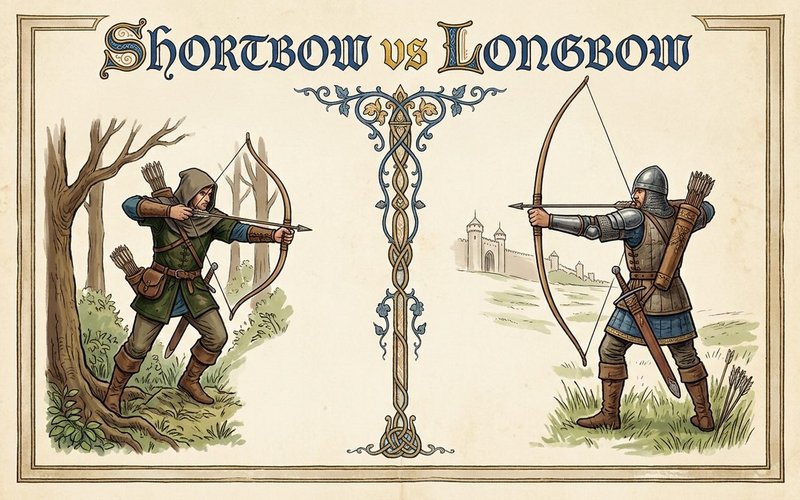
Traditional and barebow classes are where a recurve's family tree actually matters: an instinctive shooter moving between a recurve and a stick bow is a much smaller adjustment than moving to a let-off system, which is exactly the ground our shortbow vs longbow comparison covers for archers weighing a traditional setup instead of either bow on this page.
Hunting legality is a separate question from competition eligibility, and it varies by state. The Minimum Draw Weight & Kinetic Energy by State guide covers the actual legal minimums for both bow types where they differ from these general competition rules.
Holding Fatigue in the Field: Which Bow Fits a Tree-Stand or Blind Sit?
The holding-weight gap from earlier in this guide matters most exactly where you'd expect: a long, cold sit where a deer might not give you a shot for hours, and then gives you one for about four seconds.
| Scenario | Modeled Hold Time | Recommended Bow | Notes |
|---|---|---|---|
| Tree-stand, deer approaching slowly, uncertain shot window | Compound: ~60s · Recurve: ~9s | Compound | A drawn compound at 80% let-off can be held through a long, uncertain approach without shake. |
| Ground blind, close encounter, short draw-to-shot window | Compound: ~60s · Recurve: ~9s | Either | A fast draw-to-shot sequence needs less sustained holding, narrowing the practical gap. |
| Spot-and-stalk, drawing on the move | Not the deciding factor here | Either | Carry weight and profile matter more than hold time in a mobile stalk — see the anatomy section above. |
| Sub-zero stand, stiff cold-weather muscles | Compound favored by a wider margin | Compound | Cold reduces sustained holding capacity faster than it reduces draw-cycle strength, widening the gap further. |
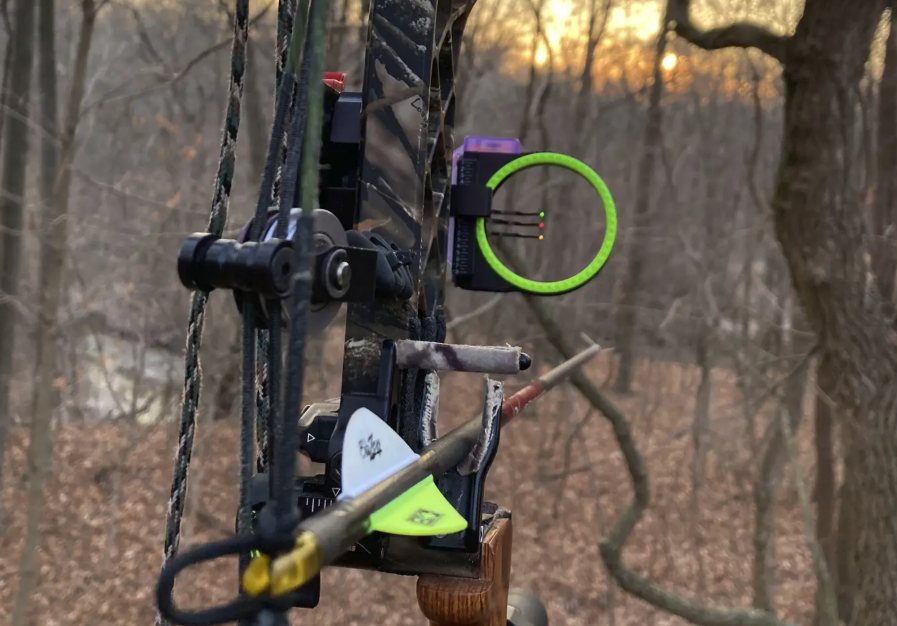
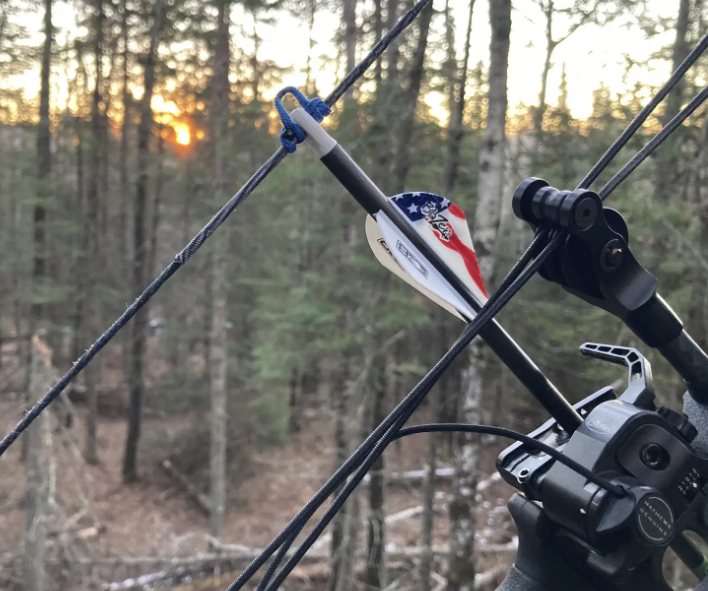
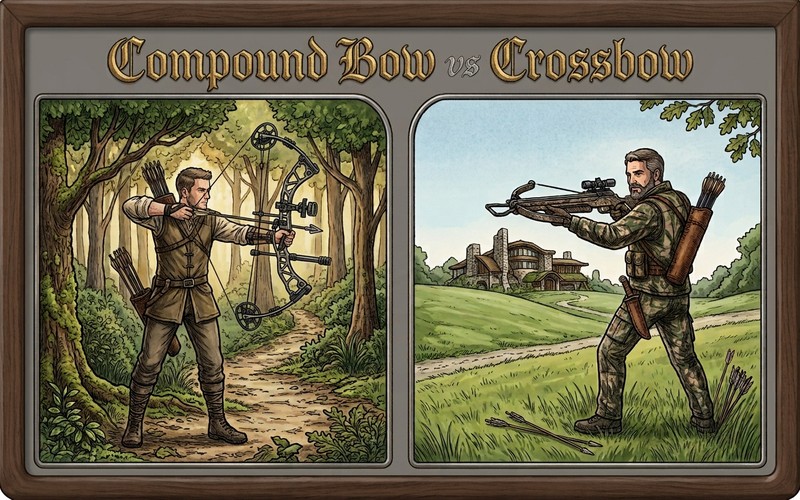
If a long hold time isn't practical at all — bad shoulder, a blind with almost no room to draw, or simply not wanting to fight the wait — the hold-time question disappears entirely with a cocked mechanism instead of a held one. That's the actual case for a third option neither bow here covers; our compound bow vs crossbow comparison runs the same kind of holding-weight and kinetic-energy math against that alternative.
How Much Maintenance Does Each Bow Actually Need?
| Task | Recurve | Compound |
|---|---|---|
| String replacement/wax | Simple, hand tools | Simple, hand tools |
| Cam timing check | Not applicable | Periodic — drifts with cable stretch |
| Draw weight adjustment | Usually requires a different limb set | Adjustable within the cam's rated range via bow press |
| Full limb/cable service | Basic hand tools | Typically needs a bow press |
| Sight/rest recalibration after travel | Minimal — instinctive or simple sight setups | More frequent — sight pins and rest drift can shift point of impact |
How Many Practice Hours Does It Actually Take to Shoot a Tight Group?
The 15–25 hour and 40–70 hour ranges cited earlier in this guide are a modeled curve, not a single controlled study: group size shrinks fast early on, then tightens more slowly the closer it gets to a consistent 5″ group at 20 yards. Set your own practice hours and shooting background below to see roughly where that curve puts each bow.
This models the same 20-yard, 5-arrow group benchmark used in the rest of this guide. It's a planning curve, not a promise — coaching, shot volume per session and how deliberately you practice all shift the real number.
How is the practice-hours-to-group-diameter curve modeled?
Group diameter is modeled as an exponential decay from a 32-inch beginner group at zero hours down toward a 5-inch floor, with a faster decay constant for the compound (reflecting the sight, release and let-off doing more of the form-holding work) and a slower one for the recurve (reflecting the larger number of form variables — anchor, back tension, instinctive aim — a shooter has to stabilize by feel).
Group = 5 + 27 × e−Hours ÷ τ × BackgroundGroup in inches at 20 yd · τ = 6 (compound) or 18 (recurve) · Background is the multiplier selected aboveThe two τ constants are chosen so the curve crosses roughly 5–7 inches inside the 15–25 hour window for a compound and the 40–70 hour window for a recurve — the same directional ranges cited elsewhere on this page, not an independent number. Treat the output as a planning curve, not a guarantee: coaching, session frequency and how deliberately someone practices all move the real number in either direction.
What Do Archery Forums Actually Say About Compound Bows vs Recurve Bows?
Aggregated sentiment from archery forum threads (ArcheryTalk, Reddit r/Archery, r/Bowhunting): Compound threads consistently praise the ability to hold steady on a target for longer without shaking, while recurve threads more often cite the simplicity, feel and lower long-term fuss as reasons shooters stick with it despite the steeper learning curve.
Top praised feature: A compound's let-off gets cited more often than its raw speed rating, especially in hunting-focused threads about long tree-stand sits.
Common friction point: Recurve threads repeatedly flag archer's paradox and spine tuning as the most frustrating early hurdle, while compound threads flag cam-timing drift and the need for a press as the most common maintenance annoyance.
| Category | Compound Bow | Recurve Bow |
|---|---|---|
| Holding steadiness at full draw | 9/10 | 5/10 |
| Tuning forgiveness | 8/10 | 5/10 |
| Rapid proficiency | 7/10 | 4/10 |
| Simplicity / low maintenance | 5/10 | 9/10 |
| Weight & carry comfort | 6/10 | 8/10 |
The hour figures above are ArcheryEra's own modeled estimate, aggregated from directional forum patterns. We're setting up a short reader poll to replace that estimate with real submitted numbers over time — practice hours to your first consistent group, by bow type.
Poll launching soon — check back, or leave your own numbers in the comments below in the meantime.
Frequently Asked Questions
Is a compound bow more powerful than a recurve bow?
In commonly cited flagship-class comparisons, yes. A 70-pound compound bow shooting a 400-grain arrow at roughly 328 fps produces about 96 ft-lbs of kinetic energy, versus roughly 33 ft-lbs from a 45-pound recurve bow shooting a 500-grain arrow at roughly 172 fps. The gap narrows if the recurve is built heavier, but at typical hunting and target draw weights the compound's power advantage generally holds.
What does let-off actually mean on a compound bow?
Let-off is the percentage of peak draw weight the cam system removes once the bow reaches full draw. An 80% let-off on a 70-pound compound means the archer only holds roughly 14 pounds at anchor, even though the arm pulled through the full 70 pounds earlier in the draw cycle. A recurve bow has no let-off — the archer holds the full peak weight for as long as the bow stays drawn.
Why is a recurve bow harder to tune than a compound bow?
A recurve's arrow rest sits to one side of the bow's true centerline, so the arrow has to flex around the riser as it leaves the string — a bigger archer's paradox correction than a compound bow's centershot rest requires. That larger correction makes a recurve more sensitive to a spine mismatch than a compound bow shooting the same arrow.
Can you use a compound bow in Olympic archery?
No. World Archery's Olympic program is recurve-only — a compound bow is not eligible for Olympic competition, though it has its own World Archery, IFAA and NFAA compound divisions at other events.
How much longer does it take to learn a recurve bow than a compound bow?
Modeled and forum-reported benchmarks suggest a new shooter using a compound bow's sight and release aid can reach a consistent 5-inch group at 20 yards in roughly 15 to 25 hours. Building the same consistency on a recurve, which leans on repeatable anchor point and instinctive or barebow form, typically takes 40 to 70 hours.
How long can you hold a compound bow at full draw compared to a recurve?
Because a compound bow's let-off drops the held weight sharply, a hunter holding roughly 14 pounds at anchor can typically stay at full draw for around a minute before fatigue-driven shake sets in. A recurve archer holding the full peak weight — commonly 40 to 50 pounds for a hunting-weight bow — typically starts shaking within 8 to 12 seconds.
Is a recurve bow lighter and easier to carry than a compound bow?
Generally yes. A recurve has no cams, cables or let-off module, which usually puts it a pound or more lighter than a comparable compound bow, and its simpler limb-and-riser construction needs less routine mechanical maintenance.
Does a compound bow need more maintenance than a recurve bow?
Yes, as a rule. A compound bow's cam timing, cables and string stretch drift over time and generally need a bow press and a qualified technician to reset, while a recurve's string and limbs can usually be checked and adjusted with basic tools.
Can a beginner start on a recurve bow instead of a compound?
Yes, and many programs start beginners on a recurve specifically because it builds form fundamentals — anchor point, back tension, release — that a compound's let-off and sight can otherwise mask early on. The tradeoff is a longer path to tight, repeatable groups.
Where do the practice-hour figures in this guide come from?
The 15–25 hour and 40–70 hour benchmarks are ArcheryEra's own modeled estimate, aggregated from directional, repeatedly-reported practice patterns across coaching program write-ups and forum accounts rather than a single controlled study. Treat the specific hour counts as a planning range, not a personal guarantee — the community poll above is collecting real reader-submitted numbers to refine this over time.
Our Final Take: A compound bow wins on raw numbers — more kinetic energy per pound of peak weight, a fraction of that weight actually held at anchor, and a shorter path to a tight group. A recurve wins on everything that number doesn't capture — less to maintain, less to go wrong in the field, the only bow class Olympic archery recognizes, and for a lot of shooters, simply more feel per shot.
👉 Recommendation: If a long, cold sit and maximum downrange energy matter most, run the Peak vs. Holding Weight simulator above with your actual draw weight and let it make the case. If the goal is Olympic or traditional competition, feel, or the lowest-maintenance setup you can own, the recurve's tradeoffs are the ones worth living with.

Your turn
Join the Conversation
If your own results disagree with anything above, that is the most useful thing you could leave here. Setup, distance and what actually happened beats an opinion every time — and corrections get the page changed.