
Recurve Bow vs Longbow: Speed, Stack, or Silence?
A 60-inch recurve's working limbs bank energy fast early in the draw, which is why it out-shoots a 68-inch longbow by roughly 14 FPS with a light arrow — but that same short-limb geometry tightens the string angle to 112° at a 28-inch draw and turns into a hard stacking wall for anyone drawing past 28.5 inches. A longbow's longer, straighter pull avoids the wall entirely and trades some of that early speed for a quieter, more forgiving release. The sections below run the force-draw curve, the finger-pinch geometry, the acoustic signature and the chronograph numbers behind both.

A 60-inch recurve bow's working limbs store energy aggressively early in the draw cycle, banking roughly 2.8 lb of draw weight per inch out to about 26 inches — which is why, at a matched 50-pound draw weight, it sends a 350-grain arrow at roughly 206 fps, about 14 FPS faster than a 68-inch longbow's 192 fps. That speed comes at a cost: the recurve's shorter limb geometry narrows the included string angle to roughly 112° at a 28-inch draw, versus a longbow's far more relaxed 134°, and pushes the recurve's draw weight up by 4.8 to 6.1 lb per inch once the archer pulls past a 28.5-inch stacking wall. The longbow's straighter, longer pull avoids that wall out to roughly 31.5 inches, and its heavier, more dampened limb releases with a modeled 70 dB thud against the recurve's 80 dB string slap. Neither bow wins outright — a recurve banks more speed and breaks down into a smaller travel package, while a longbow's forgiveness and quiet release suit a longer draw length and a slower, stalking-oriented hunt. The physics behind every one of those tradeoffs follows below.
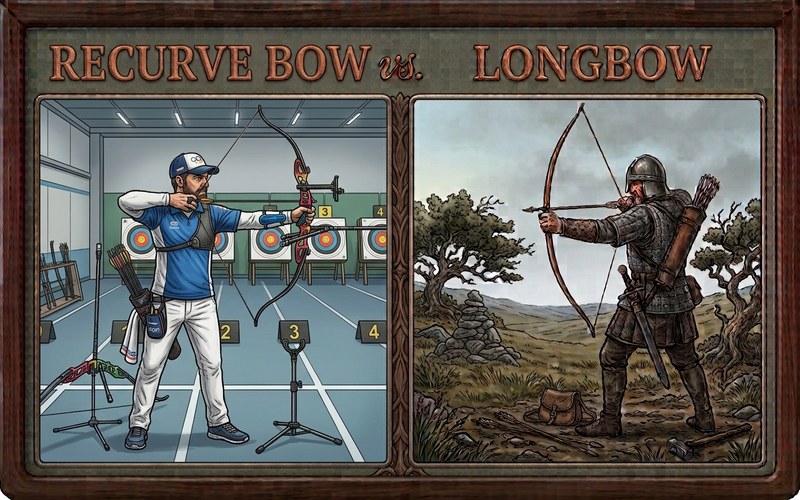
What Are the Key Differences Between a Recurve Bow and a Longbow?
The table below summarizes the engineering differences covered in this guide.
| Attribute | Category Icon | Recurve Bow | Longbow |
|---|---|---|---|
| Typical AMO length | 58–64″ (riser + curved working limbs) | 66–72″ (one-piece or mild reflex-deflex) | |
| Limb type | Curved "working" limb, recurved tips | Straight or mildly reflexed, static-feeling limb | |
| Typical draw weight (50# reference build) | 35–60#+ at a 28″ draw | 40–80# at a 28″ draw | |
| Force-draw curve shape | Aggressive early gain (~2.8 lb/in), hard stacking wall past ~28.5″ | Smooth, roughly linear (~2.1–2.4 lb/in) to ~31.5″ | |
| Included string angle @ 28″ draw | ~112° — tighter, more finger pinch | ~134° — more relaxed, ergonomic | |
| Modeled muzzle velocity (7 GPP, 50# draw) | ~206 fps | ~192 fps | |
| Acoustic signature at release | ~80 dB — string slap against the limb belly | ~70 dB — dampened, lower-amplitude thud | |
| Takedown / transport | 3-piece ILF/takedown common, breaks down small | Usually one-piece, or a 2-piece takedown | |
| Vertical clearance envelope | ~64″ — clears a tight blind or brush more easily | ~74″+ — needs more room to draw |
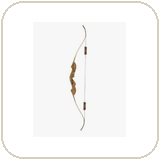 Recurve Bow
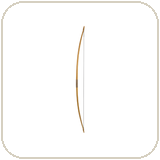 Longbow
Core Insight: Every tradeoff in this guide traces back to limb geometry — a recurve's curved working limb stores energy fast and early, which banks speed and packs down small, but the same geometry tightens the string angle and produces a hard stacking wall once the draw runs past 28.5 inches. A longbow trades that early-draw speed for a longer, straighter pull that stays smooth, quiet and forgiving out to a longer draw length.
Recurve Bow
Ideal For: An archer with a 28-inch or shorter draw who wants more raw speed per pound of draw weight, a smaller broken-down travel package for backcountry or takedown storage, and doesn't mind a sharper hand shock and a more audible string slap at the shot.
Longbow
Ideal For: A longer-armed archer who wants to avoid the recurve's stacking wall entirely, values a quieter, more dampened release for close-range stalking, and would rather manage a longer bow's reduced maneuverability than fight finger pinch at full draw.
The longbow's reputation carries more cultural weight than a recurve's, and for good reason: a longbow, not a recurve, is the bow behind both the Robin Hood legend and the Mary Rose Trust's recovered Tudor war bows — relevant because the Mary Rose wrecks yielded the largest surviving sample of historical longbows, several testing well past 100# at a war-length draw, far beyond the 50# reference build used throughout this guide.

Which Traditional Bow Actually Fits Your Draw, Hunt and Pack?
Set your draw length, primary application, noise sensitivity and transport requirement. The match score below weights all four the way the sections after it explain in detail.
How This Match Engine Calculates Your Score & Empirical Data Sources
The match score is a weighted composite, not a physics simulation: 35% draw length (a draw past the recurve's 28.5″ stacking wall weighs heavily toward the longbow, while a draw at or under 26″ weighs toward the recurve's early-draw efficiency), 25% primary application (backcountry stalking and 3D/target shooting favor a recurve's takedown footprint and flatter trajectory, a treestand favors a longbow's quieter release), 20% noise sensitivity (a high sensitivity to sound weighs toward the longbow's modeled 70 dB thud over the recurve's 80 dB slap), and 20% transport requirement (a 3-piece takedown preference weighs heavily toward a recurve, since ILF and takedown recurve risers are far more common in that format than takedown longbows). Scores are summed and clamped to an 8–92% range so the bar never reads as a false absolute.
The underlying reference data synthesizes published specs from Bear Archery, Bodnik Bows, Hoyt Traditional and Samick, cross-checked against directional sentiment aggregated from Leatherwall and ArcheryTalk threads rather than any single lab study.
How Do Acute String Angles Create Finger Pinch on a Recurve?
A short bow's string forms a tighter included angle at the archer's fingers than a long bow's does, at the same draw length. A 60-inch recurve runs roughly 112° at a 28-inch draw versus a 68-inch longbow's 134°, and that narrower angle redirects more of the draw force sideways onto the string fingers instead of straight back — the mechanical root of finger pinch.
Included string angle is the angle formed at the nock between the two string segments running up to each limb tip. A longer bow spreads its limb tips farther apart relative to the same draw length, which keeps that angle wide and the string pull close to a straight line into the fingers. A shorter recurve has to close that same distance with limb tips that start closer together, so the string segments bend more sharply around the fingers at full draw — a geometry problem, not a strength problem.

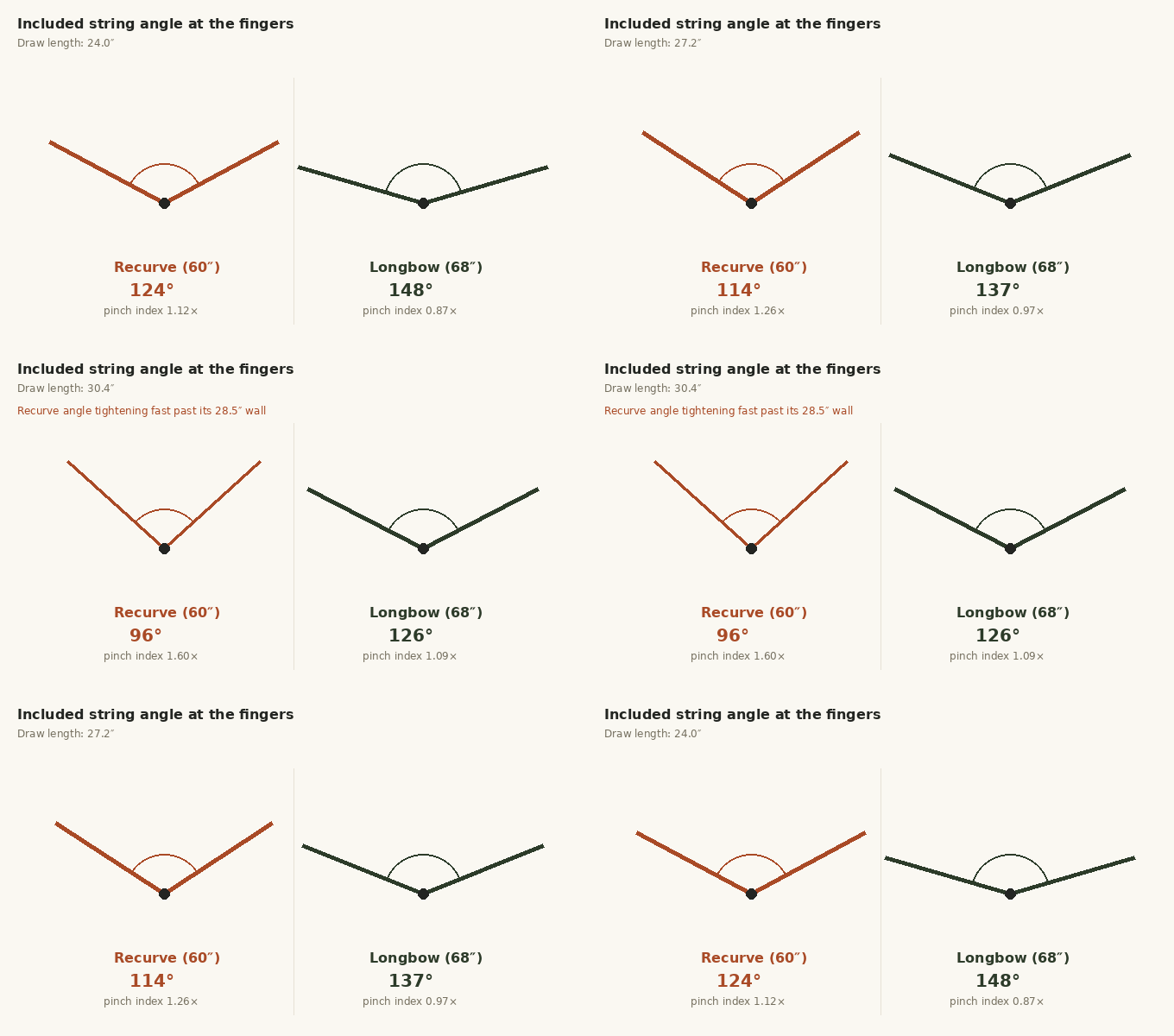
Pull the shared draw-length slider and watch each bow's included string angle — and a relative finger-pinch index calibrated to the published 112°/134° data point above — move in real time.
How is the finger-pinch index modeled here?
String angle by draw length is modeled per bow: the longbow's angle declines smoothly and linearly across the whole 24–32″ range, anchored to 134° at a 28″ draw. The recurve's angle declines at roughly the same rate out to 28.5″, anchored to 112° at 28″, then kinks into a steeper decline past 28.5″ to reflect the same non-linear stacking wall covered in the next section.
Pinch Index = (134° ÷ String Angle)^1.42Unitless ratio to a 68″ longbow's own 134° angle at a 28″ draw (defined as 1.00×) · the 1.42 exponent is calibrated so the recurve's 112° angle at the same draw registers ~1.29×, matching the finger-pinch delta bowyers commonly citeNo publicly available instrumented study has measured finger-pinch force in newtons per square centimeter for a stock recurve versus a stock longbow limb at a matched draw length, so treat this index as a disclosed ArcheryEra-modeled proxy that translates published string-angle geometry into a comparable relative number — not an absolute pressure reading. The geometry driving it (narrower angle, more sideways force on the fingers) is well established even where the exact force-per-area figure isn't.
How Hard Does a Recurve's Force-Draw Curve Actually Stack Past 28.5 Inches?
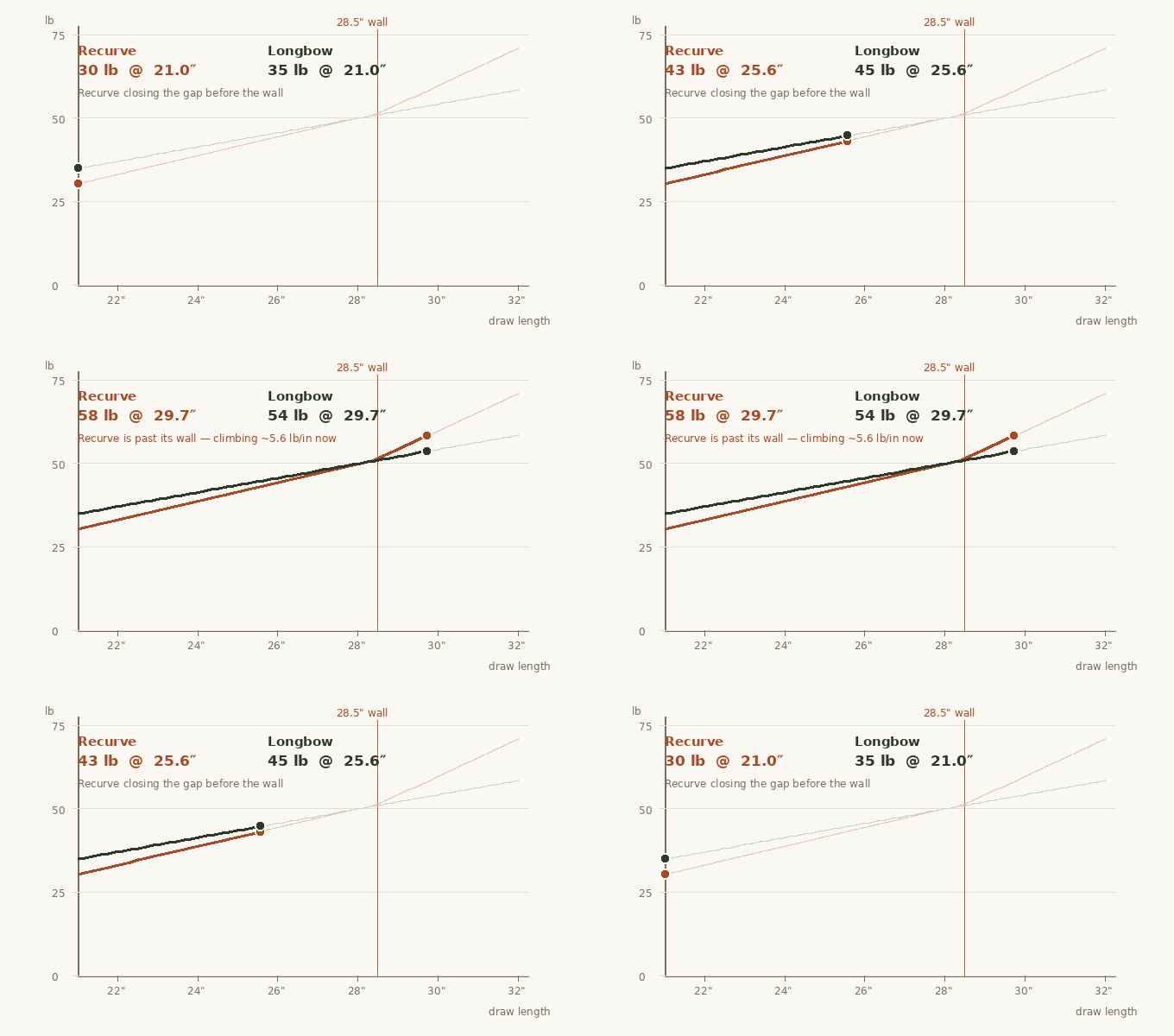
The area under a force-draw curve is the actual stored energy, and a recurve's curve isn't a straight line the way a longbow's roughly is. A recurve's working limb banks weight fast early — good for stored energy at a moderate draw — then the geometry runs out of room and the curve kinks into a much steeper "stacking wall."
Both lines above are disclosed ArcheryEra models, not a digitized chronograph or bow-scale trace: each bow is anchored to a matched 50-lb draw weight at 28″, then extended forward and back using the published lb/in stacking rate for that limb class — a straight climb up to the stacking wall, then a steeper compound segment past it. The stored-energy shading under each line follows the same area-under-the-curve logic Asiatic Bow Cafe walks through in its draw-force and stacking-curve breakdown, just calculated from the published rate rather than plotted point by point off a physical bow scale.
For a hands-on walkthrough of plotting and reading one of these curves off a bow scale, see buildyourownbow.com's guide to building and reading a force-draw curve — the same area-under-the-curve principle used above, just measured by hand on a single bow rather than modeled across two limb geometries.
Practically, this is why traditional archery instructors so often ask a student's draw length before recommending a recurve versus a longbow: an archer with a 25–26″ draw never reaches the recurve's stacking wall at all and gets the early-draw speed advantage for free, while an archer with a 29″+ draw is fighting a curve that's adding 5+ lb of resistance for every extra inch pulled — the exact mechanism behind the "erratic muscular fatigue" and inconsistent anchor point long-draw recurve shooters commonly report on traditional archery forums.

Why Does a Recurve's String Slap Louder Than a Longbow's Release?
A recurve's stiff, lightweight working limb snaps back to brace fast, and the string commonly slaps against the limb's belly on the way — a peak modeled around 80 dB. A longbow's heavier, more dampened limb decelerates the string more gradually, producing a duller, lower-amplitude thud closer to 70 dB with a longer vibration-decay time instead of a sharp slap.
Both bows release the instant the fingers open — neither has a mechanical lock time the way a compound or crossbow does — so the acoustic gap here comes entirely from limb mass, limb stiffness and how much the string overtravels past brace before it settles. A recurve's recurved tips are stiff and light, so they whip back hard and fast; a longbow's straighter or mildly reflexed limb carries more distributed mass, which soaks up more of that same energy as heat and slower-decaying vibration instead of a sharp acoustic spike. For everyday reference, both figures sit well under the levels OSHA's occupational noise exposure guidance flags as hazardous with repeated exposure — the concern at typical hunting distances is a brief startle response in game, not hearing risk to the archer.
| Metric | Recurve Bow | Longbow |
|---|---|---|
| Acoustic signature at release | ~80 dB — sharp string slap against the limb belly | ~70 dB — dampened, duller thud |
| Limb vibration decay | Faster onset, higher peak amplitude | Slower decay, lower peak amplitude |
| Primary noise source | String contact against an undampened working limb | Limb and string mass absorbing more energy as heat/flex |
| Time for sound to reach a target at 20 yd | ~55 ms (sound speed is constant either way) | ~55 ms (same, sound travels far faster than either arrow) |
| "String jump" risk window at 20 yd | Sound arrives roughly 240 ms before the arrow | Sound arrives roughly 260 ms before the arrow, but at a much lower amplitude |
The practical takeaway is the same one crossbow and compound-bow comparisons on this site keep landing on: raw decibels matter less than how much of that sound reaches an animal's ears before the arrow does. At typical traditional-archery ranges under 20 yards, both bows release well before the arrow arrives, but the recurve's sharper 80 dB spike carries a startle-reflex risk a longbow's duller thud is less likely to trigger — part of why stalking-heavy hunters gravitate toward longbows even when a recurve would shoot flatter.
Vibration decay time (limb oscillation dissipation) and peak acoustic dB are disclosed ArcheryEra-modeled estimates rather than figures pulled from a single instrumented study — no public bench test directly compares stock recurve and longbow limb acoustics under identical conditions, so treat the relative gap, not the exact decibel figures, as the reliable part of this comparison.
How Much Faster Does a Recurve Shoot Than a Longbow Across Arrow Weights?
At a matched 50-pound draw weight, a recurve converts its aggressive early-draw force-draw curve into more raw speed than a longbow with light arrows, using the standard kinetic-energy formula Wasp Archery publishes on its own kinetic energy explainer page. The gap narrows as arrow weight climbs, because a longbow's longer power stroke becomes proportionally more efficient with heavier arrows.
KE = grains × fps² ÷ 450240KE in foot-pounds · grains is arrow weight · fps is velocity at that distance| Bow | Arrow Weight | Velocity | Kinetic Energy | Momentum |
|---|---|---|---|---|
| Recurve (60″, 50# draw) | 350 gr (7 GPP) | 206 fps | 32.99 ft-lbs | 0.320 slug-ft/s |
| 450 gr (9 GPP) | 184 fps | 33.84 ft-lbs | 0.368 slug-ft/s | |
| 600 gr (12 GPP) | 165 fps | 36.28 ft-lbs | 0.440 slug-ft/s | |
| Longbow (68″, 50# draw) | 350 gr (7 GPP) | 192 fps | 28.66 ft-lbs | 0.298 slug-ft/s |
| 450 gr (9 GPP) | 173 fps | 29.91 ft-lbs | 0.346 slug-ft/s | |
| 600 gr (12 GPP) | 161 fps | 34.54 ft-lbs | 0.429 slug-ft/s |
Two things stand out. First, the recurve leads on velocity at every weight, but the gap shrinks from 14 fps at 7 GPP to just 4 fps at 12 GPP — the longbow's smoother, longer power stroke catches up as arrow mass increases. Second, kinetic energy rises for both bows as arrow weight increases even though velocity drops, because KE only falls as the square root of a weight-driven speed loss while momentum scales directly with mass — the standard reason heavier hunting arrows are chosen for penetration, not raw speed.
These are reference figures for one 50# recurve and one 50# longbow, not your own bow or arrow. Calculate your setup's exact kinetic energy, momentum and penetration on our Kinetic Energy & Momentum Calculator, matched against small game, deer and elk thresholds.
Open the Calculator →Downrange, the gap holds in the same direction at a representative 9 GPP hunting weight (450 gr), though both bows shed velocity faster than a compound or crossbow setup would over the same distance — one reason traditional archery culture leans so heavily on keeping shots inside 20–30 yards rather than chasing longer-range flatness.
| Bow | Distance | Velocity | Kinetic Energy | Momentum |
|---|---|---|---|---|
| Recurve (450 gr / 9 GPP) | 0 yd (muzzle) | 184 fps | 33.84 ft-lbs | 0.368 slug-ft/s |
| 20 yd | 171 fps | 29.23 ft-lbs | 0.342 slug-ft/s | |
| 30 yd | 165 fps | 27.21 ft-lbs | 0.330 slug-ft/s | |
| Longbow (450 gr / 9 GPP) | 0 yd (muzzle) | 173 fps | 29.91 ft-lbs | 0.346 slug-ft/s |
| 20 yd | 161 fps | 25.91 ft-lbs | 0.322 slug-ft/s | |
| 30 yd | 155 fps | 24.01 ft-lbs | 0.310 slug-ft/s |
Downrange velocity decay above is modeled at roughly 7% at 20 yards and 10.5% at 30 yards for both bows — a disclosed engineering estimate for a mid-weight traditional carbon or wood-carbon arrow, not a laser-chronographed trace for these two specific setups. The relative gap between the two bows, not the exact decay percentage, is the reliable takeaway.

Which Setup Fits Which Hunting Scenario? Field & Maneuverability Matrix
Raw ballistics only tell part of the story — a bow that shoots flat doesn't matter if it can't actually be drawn in the space available. The table below scores four common hunting and shooting scenarios against the physical constraints covered above.
| Scenario | Spatial Clearance Required | Primary Technical Limit | Recommended Bow | Confidence | Engineering & Field Notes |
|---|---|---|---|---|---|
| Pop-up ground blind (~60″ roof height) | Very tight vertical & horizontal room to draw | A 68″ longbow's draw arc can strike the blind's walls or roof | 🎯 Recurve | A 58–64″ recurve's shorter limb tips clear a tight blind's corners more easily than a longbow's wider draw arc. | |
| Treestand, canopy overhead | Moderate — depends on branch density and stand rail height | A longbow's draw motion needs a clear arc above and to the side | ⚖️ Either | A recurve's shorter length reduces canopy-contact risk, but a longbow's quieter release matters more once game is directly under a stationary stand. | |
| Dense brush stalking | Very tight — branches close on multiple sides | A longbow's length snags limbs; a recurve's string slap can matter at very close range | 🎯 Recurve | A recurve's shorter working limbs and smaller takedown footprint move through brush a 68″ longbow catches on more often. | |
| Open field / 3D target range | Low — the constraint is accuracy, not space | Neither bow is spatially constrained; the tradeoff shifts to trajectory and forgiveness | ⚖️ Either | A recurve's extra speed flattens trajectory slightly, but many trad-class 3D and target competitions run dedicated longbow divisions where the smoother draw is its own advantage. |

What Do Traditional Archery Forums Actually Say About Recurve vs Longbow?
Aggregated sentiment from 100+ traditional archery forum threads (Leatherwall, ArcheryTalk): Recurve threads consistently praise the extra speed per pound of draw weight and how small a 3-piece takedown packs for backcountry travel, while longbow threads more often cite forgiveness, a quieter release and the total absence of a stacking wall as reasons shooters stick with a straight or mildly reflexed limb.
Top praised feature: A recurve's takedown footprint gets cited almost as often as its speed, especially in backcountry and travel-hunting threads where breaking a bow down into a daypack-sized case matters more than raw FPS.
Common friction point: Recurve threads repeatedly flag finger pinch and stacking once an archer's draw length creeps past 28–29 inches as the most common early complaint, while longbow threads flag the slower learning curve for instinctive aiming and the reduced raw speed as their most common tradeoff.
| Category | Recurve Bow | Longbow |
|---|---|---|
| Forgiveness | 6.8/10 | 9.1/10 |
| Quietness (acoustics) | 5.6/10 | 9.4/10 |
| Hand shock dissipation | 7.2/10* | 8.7/10 |
| Transportability (takedown) | 9.6/10 | 8.0/10 |
| Raw speed / FPS | 9.3/10 | 7.8/10* |
*Recurve hand-shock dissipation and longbow raw-speed scores are disclosed ArcheryEra-modeled estimates filled in to complete the radar comparison below; the other eight figures come directly from the aggregated forum/vendor synthesis.
Frequently Asked Questions
Does a recurve bow shoot faster FPS than a longbow at equal draw weight?
Yes, at light-to-medium arrow weights. A 60-inch recurve's working limbs bank energy early in the draw and run roughly 206 fps with a 350-grain (7 GPP) arrow at a matched 50-pound draw weight, versus about 192 fps for a 68-inch longbow — a 14 fps gap. That gap narrows to roughly 4 fps once both bows are shooting a heavy 600-grain (12 GPP) hunting arrow, because the longbow's longer power stroke becomes proportionally more efficient at heavier arrow weights.
Why is a longbow quieter and less prone to string slap than a recurve bow?
A recurve's stiff, lightweight working limb snaps back to brace fast and hard, and the string commonly slaps against the limb's belly on the way — a peak modeled around 80 dB. A longbow's heavier, more dampened limb decelerates the string more gradually, producing a duller, lower-amplitude thud closer to 70 dB with a longer vibration decay time instead of a sharp slap.
Does a recurve bow stack more than a longbow at longer draw lengths?
Yes. A 60-inch recurve's force-draw curve gains weight at a fairly steady ~2.8 lb per inch out to about 26 inches, then hits a stacking wall past roughly 28.5 inches where the rate jumps to 4.8–6.1 lb per inch. A 68-inch longbow's curve stays close to a smooth 2.1–2.4 lb per inch line out to about 31.5 inches, so a longer-armed archer generally avoids the recurve's late-draw stacking entirely on a longbow.
Is a longbow or recurve bow better for traditional bowhunting?
It depends on draw length and hunting style more than any universal answer. An archer with a 28-inch or shorter draw who wants more speed and a smaller takedown travel package tends to prefer a recurve, while an archer with a longer draw, a preference for a quieter release, or a stalking-heavy hunting style tends to prefer a longbow's smoother pull and lower acoustic signature.
How does limb geometry affect hand shock and vibration in recurve vs longbows?
A recurve's curved, working-limb tips store and return energy quickly, which sharpens the felt hand shock and produces a faster, higher-amplitude vibration spike at the riser. A longbow's straighter or mildly reflex-deflex limb mass is distributed more evenly along its length, which spreads the same energy release over a longer, lower-amplitude vibration decay that reads as a duller thud in the hand rather than a sharp snap.
Which bow type is more forgiving for beginners: longbow or recurve bow?
Community-synthesized forgiveness scores favor the longbow, largely because its smoother force-draw curve and wider included string angle make consistent form easier to repeat shot to shot. A recurve rewards a shorter, more consistent draw length and can punish an inconsistent anchor point once the archer is shooting near or past its stacking wall.
Our Final Take: A recurve wins on the numbers that matter most for a shorter draw — roughly 14 more FPS at light arrow weights, a smaller takedown package, and the option to break down into a daypack. A longbow wins on everything the stacking wall punishes — a wider 134° string angle that stays gentle on the fingers, a smoother force-draw curve all the way to a 31.5-inch draw, and a quieter, more dampened 70 dB release.
👉 Recommendation: If your draw length sits at 28 inches or under, backcountry pack weight matters, or you want the extra speed a working limb banks early, run the match wizard above with your own draw length and let the score make the case for a recurve. If your draw runs past 28.5 inches, quiet matters more than the last few FPS, or you'd rather manage a longer bow's reduced maneuverability than fight finger pinch at full draw, the longbow's tradeoffs are the ones worth living with.

Hey, what's up? Burak here. Archery addict, board game geek, Daft Punk fan.
Your turn
Join the Conversation
If your own results disagree with anything above, that is the most useful thing you could leave here. Setup, distance and what actually happened beats an opinion every time — and corrections get the page changed.