
Historical Bow Names: Iconic Bows & Legendary Archers in Human History
A longbow helped end the age of the mounted knight at Agincourt. An Ottoman recurve out-shot almost everything else on a battlefield, by design, not luck. A yumi's grip sits off-center for a reason samurai kept honoring long after it stopped mattering. Here's what the wood, horn and sinew actually did — civilization by civilization, archer by archer.

Short answer: five documented traditions produced the historical bows that still get cited by name today — and none of them needed a proper name to become legendary.
- English longbow: yew self-staves drawing 100–185 lb, physically tested from Mary Rose wreckage, decisive at Agincourt in 1415.
- Japanese yumi: an asymmetric bamboo-and-wood laminate, gripped a third of the way up, still shot exactly this way in kyudo today.
- Ottoman & Turkic-Mongol composite bows: horn-sinew-wood construction built for extreme cast-to-weight ratio, not raw draw weight.
- Ancient Near Eastern composite bows: Egyptian, Assyrian, Persian and Scythian designs with no surviving numerical draw-weight record at all.
- Legendary and semi-legendary archers: Robin Hood (English folklore), Tozkoparan İskender (part-documented, part-legend) and Genghis Khan's cavalry, whose nephew's real shot is carved in stone.
The full material-by-material, draw-weight-by-draw-weight comparison sits in the matrix table further down this page.
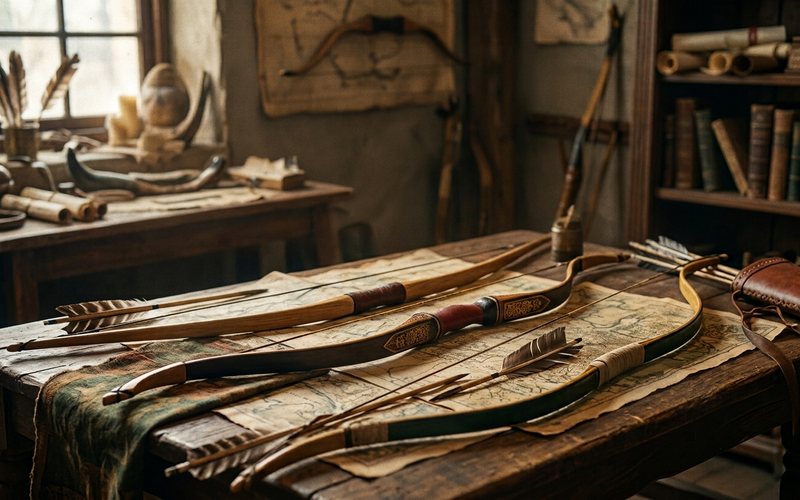
This pulls from the same History word bank used across the site — real construction terms like horn-and-sinew, yew-stave and kyudo, not invented fantasy syllables. Hit the button for one instantly, no reload needed.
How Heavy Was the English Longbow, Really?
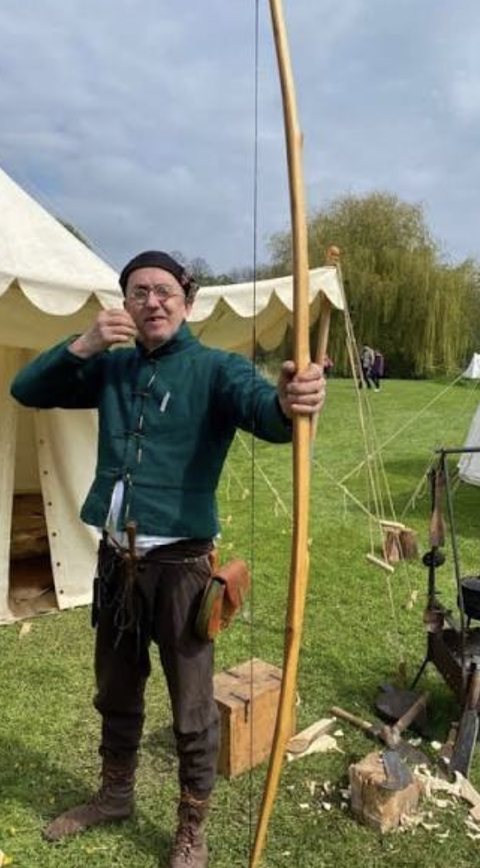
Most modern hunting bows draw 40 to 60 lb. The English longbow recovered from the wreck of the Mary Rose — Henry VIII's flagship, sunk in the Solent in 1545 and raised in 1982 — makes that number look almost casual. Robert Hardy's research team, working with the Mary Rose Trust, pulled a sample of the 172 recovered yew staves on an Instron testing machine until failure, then modeled backward through the wood degradation the bows had suffered underwater for over four centuries. Their conclusion put draw weights at roughly 100 to 185 lb, with the most common Tudor-era combat bow landing around 150 to 160 lb — significantly higher than the 80–110 lb range earlier historians had assumed from dimensions alone.
It's the reason Agincourt (1415) still gets cited as the longbow's defining moment. English and Welsh archers, several thousand strong, loosed at a rate modern longbow shooters put around 10 to 12 arrows a minute into French cavalry and dismounted knights already struggling in deep mud. No single arrow needed to punch clean through plate to be decisive — a mass volley into horses, joints and visor slits at that draw weight did the tactical work. The archers themselves paid a physical toll for it: skeletal remains recovered from the Mary Rose show measurably enlarged left arms and bone spurs consistent with a lifetime of drawing bows in this weight class, starting in childhood.
Why Is the Japanese Yumi Bow Asymmetric, and What Is Kyudo?
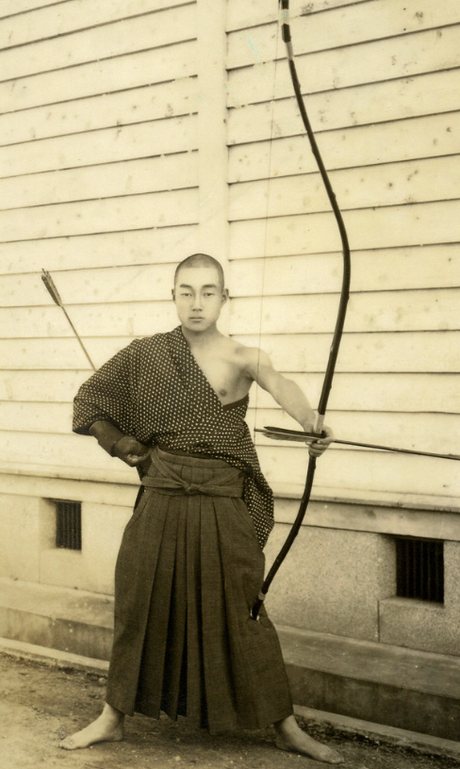
Every bow tradition above grips at or near the physical center of the stave. The yumi doesn't — the grip sits roughly a third of the way up from the lower tip, about two-thirds down from the top, on a bow that already runs 212 to 245 cm, longer than most archers who shoot it. Historians offer competing explanations: some tie it to mounted archery, where a horse's neck and the archer's own leg position make a centered grip awkward; others point to how differently the wood in a single-piece self-bow flexes above and below a natural centerline. Neither theory has fully displaced the other, and pretending one has would be dishonest.
Construction evolved from single-piece wood (maruki yumi) toward increasingly sophisticated laminates from the Heian period onward — bamboo facings over a wood core, eventually the higoyumi style with a multi-piece bamboo core sandwiched in wood and bamboo. The bow remained a primary samurai weapon through the age of the sword, and kept seeing real use even after tanegashima firearms arrived, because guns of that era failed outright in wet weather and a yumi didn't. Kyudo — "the way of the bow" — is what the practice became once the Edo period's long peace turned archery from a battlefield skill into a meditative discipline, and it's still shot with the same asymmetric grip today, on a daikyu (the standard long bow) or a hankyu (a shorter, half-length variant) depending on context.
Here's a gap this page won't paper over: unlike the Mary Rose longbows, no surviving pre-modern Japanese source states a numerical draw weight for war-era yumi. Modern kyudo bows are built to a range set by the practitioner's grade and physical strength rather than a fixed historical spec, and reenactor estimates for combat-era daikyu are exactly that — estimates, not measurements. This page isn't going to manufacture a number that doesn't exist just to fill a table cell.
What Made Ottoman and Turkic-Mongol Composite Bows So Effective at Distance?
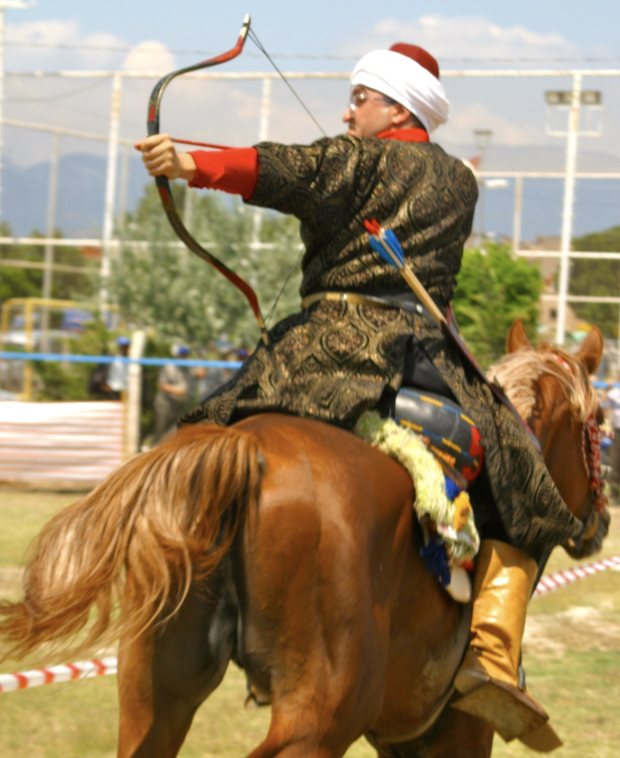
Composite construction, not brute draw weight, is the engineering story here. An Ottoman bow laminates a wood core (maple was the preferred choice), horn on the belly facing the archer, and sinew on the back, bonded with animal glue. Horn compresses under load far more efficiently than wood ever can; sinew stretches and snaps back with less energy loss than wood fibers under tension. Put both on either side of a wood core and the same draw length stores meaningfully more usable energy in a shorter, lighter bow — a real, measurable engineering advantage documented in the Cambridge assessment of Ottoman bow draw weight and tactical use, not folklore.
After the Ottoman navy's defeat at the Battle of Lepanto in 1571 pushed composite-bow archery further away from the battlefield, Ottoman bowyers doubled down on a different goal: menzil, or flight archery — the art of casting the lightest possible arrow the farthest possible distance, not the heaviest arrow through the thickest armor. Istanbul's Okmeydanı ("Arrow Field") became the practice ground and record book for this discipline: stone markers, or kitabe, were carved on the spot where a shot landed, recording the archer's name and the distance for anyone who could beat it later. Contemporary accounts describe pillars near Constantinople commemorating shots around 800 yards, and a documented 1794 contest reached 415 yards against the wind and 482 with it — figures European visitors initially assumed were exaggerated until they measured the ground themselves.
Researcher Adam Karpowicz's physical survey of surviving Istanbul arsenal bows found draw weights ranging from about 40 to 240 lb, averaging around 120 lb — a wide spread because war bows, hunting bows and specialist flight bows were built to different specs within the same broad tradition. The same horn-sinew-wood recipe, on a larger and less recurved scale, underpins the Mongol composite bow that Genghis Khan's cavalry carried — typically two per rider, a longer bow for range and a shorter one for mounted close combat, wrapped in birch bark for weatherproofing against exactly the kind of moisture that could ruin the animal-glue laminate.
How Did Ancient Egypt, Assyria, Persia and Scythia Build Their Bows?
The composite-bow principle behind the Ottoman and Mongol weapons above isn't a medieval invention — it goes back millennia further, into the ancient Near East and the Eurasian steppe, and this is the section where honesty about missing data matters most. New Kingdom Egyptian pharaohs are depicted shooting composite bows from chariots as early as roughly 1600 BCE, most famously Ramesses II at the Battle of Kadesh. Assyrian palace reliefs from the 9th to 7th centuries BCE show royal guard and cavalry archers using the same horn-sinew-wood tradition in siege warfare. Achaemenid Persian infantry fought in sparabara formation — a wall of shields fronting ranks of composite-bow archers — against Greek hoplites at Marathon, Thermopylae and Plataea.
The Scythians, nomadic steppe archers roughly contemporary with classical Greece, carried a compact composite bow small enough to shoot from horseback, stored together with its arrows in a combined case-and-quiver called a gorytos. As research compiled by the historical-weapons researcher behind Book and Sword's survey of Iron Age bow weights puts it plainly: no surviving text from ancient Egypt, Assyria or Persia states a bow's draw weight numerically. Every figure attached to these traditions today comes from modern replica testing, not a primary source doing the measuring for us — the best proxy is the Yanghai bow, a roughly 1000 BCE composite bow recovered in Xinjiang, whose modern replica draws about 120 lb at a 28-inch draw, with researchers estimating the plausible historical range at 80 to 140 lb.
Sit with that gap instead of glossing over it. It doesn't mean these bows were weak — it means precision claims about them are modern inference dressed up as ancient fact, and this page would rather say so directly than borrow a number from a forum post that sounds more authoritative than it is.
Which Historical Archers Actually Had Named Bows? Robin Hood, Tozkoparan İskender & Genghis Khan's Cavalry
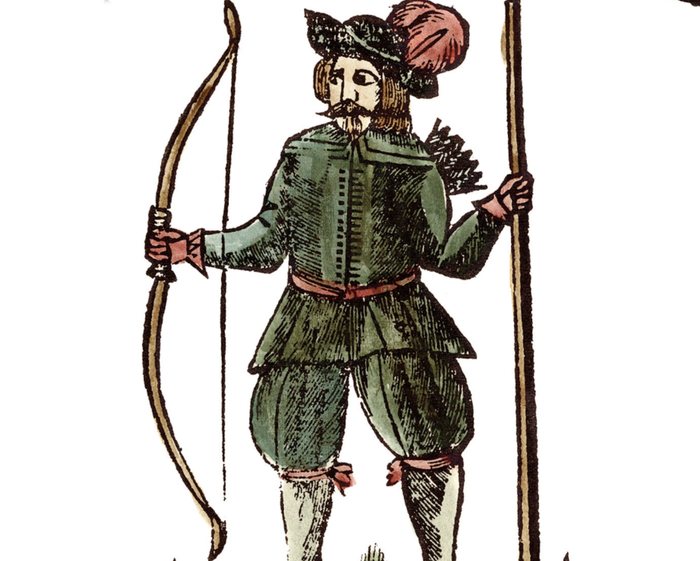
Robin Hood belongs in this section as folklore, not history, and being precise about that distinction matters. No contemporary record confirms a real individual matching the legend; the earliest ballads date to the 14th and 15th centuries, generations after his supposed setting, and his story absorbed new details for centuries afterward. His longbow is famous the way Hawkeye's or Katniss's bow is famous — tied permanently to the archer's name, never given a proper name of its own. It's a real pattern, not a gap in the research: ArcheryEra's legendary-archers roundup covers the folklore side in more depth.
Tozkoparan İskender sits in a harder-to-classify middle ground. He was a real Ottoman flight archer — his name (roughly "dust-crusher") survives in Ottoman archery tradition specifically tied to Okmeydanı's record-shooting culture — but historians do not agree on a precise modern measurement for his longest shot, and some of the more dramatic claims attached to him, like splitting an arrow in mid-air, read as embellishment layered onto a real reputation rather than a documented event. Treat him as a historically-attested figure whose legend has grown past what the record can confirm, which is a different category from Robin Hood's almost entirely undocumented origin.
Genghis Khan's cavalry gets the most solid physical evidence of the three, and it doesn't even come from the Khan himself. The Stele of Genghis Khan, carved around 1224–1225 CE and now held at the Hermitage Museum in Saint Petersburg, records that his nephew Yesüngge shot an arrow 335 alds — roughly 536 meters — during a gathering of Mongol nobility. It's the earliest known inscription in Mongolian script, commemorating the shot and the archer by name — never the bow. Okmeydanı's kitabe do the same thing two centuries and two continents later. Not a coincidence. A pattern.
📊 1-Minute Historical Bow Comparison Matrix
| Bow Type / Tradition | Culture / Period | Primary Materials | Estimated Draw Weight & Range |
|---|---|---|---|
| English Longbow | England, 14th–16th c. (Mary Rose, 1545) | Yew self-stave, hemp string, horn nocks | ~100–185 lb; most common ~150–160 lb (load-tested) |
| Japanese Yumi (Daikyū) | Japan, Heian–Edo periods | Laminated bamboo & wood core, leather/rattan binding | No numerical historical record survives |
| Ottoman Composite Bow | Ottoman Empire, 15th–19th c. | Maple core, horn belly, sinew back, animal glue | ~40–240 lb surveyed; mean ~120 lb (dimensional estimate) |
| Mongol / Hunnic Composite Bow | Central Asian steppe, ~200 BCE–1300 CE | Birch wood core, horn belly, sinew back, birch-bark wrap | No universally agreed figure; reconstructions commonly modeled ~60–160 lb |
| Egyptian / Assyrian / Persian Bow | Ancient Near East, ~1600–500 BCE | Wood, horn, sinew composite (earliest laminated forms) | No numerical ancient text survives; nearby Yanghai-bow replicas suggest ~80–140 lb |
| Scythian Bow (Gorytos-cased) | Eurasian steppe, ~700–200 BCE | Wood, horn, sinew composite, compact mounted-use form | No surviving numerical record; smaller mounted geometry than steppe war bows |
Rows marked "no numerical record" aren't gaps in this page's research — they're gaps in the surviving historical record itself, and every figure that is given traces back to either destructive physical testing (English longbow) or a named researcher's dimensional survey (Ottoman bow), not folklore.
How Did Historical Cultures Actually Name Their Bows?
Fictional bows lean on individual proper names — Belthronding, Taulmaril, Excalibur's bow-shaped cousins in a dozen other franchises. Real historical archery almost never worked that way, and the pattern that replaces it is consistent across every tradition covered on this page.
- Named by type or construction, not by individual: "the English longbow," "the Ottoman flight bow," "the Manchu bow" — a whole tradition sharing one descriptive name, the same pattern ArcheryEra's fictional bow names page found in Robert Jordan's Two Rivers Longbow, a bow belonging to a region rather than a hero.
- Commemorated by archer and feat, not by weapon: the Stele of Genghis Khan names Yesüngge and his 335-ald shot. Okmeydanı's kitabe name the archer and the distance. Neither inscription bothers naming the bow itself — the achievement was portable in a way the physical object wasn't.
- Named by maker or guild reputation: a bowyer's personal skill or a workshop's regional reputation carried more weight historically than a name stamped on any single stave — closer to how a modern archer might trust a known bowyer's name over an individual bow's.
- Individually named bows only show up in the modern hobby, not the historical record: traditional-archery makers and reenactors today do sometimes give a personal bow a nickname, but that's a contemporary habit layered onto these traditions, not something documented in period sources.
It's a different naming philosophy from myth and fiction — not a lesser one, just built for a different job. A named sword in a saga needs to carry a character's whole arc. A war bow needed to be interchangeable enough that losing one specific stave didn't end an army's capability.
The generator above works the same way on purpose. It doesn't invent a one-off proper name out of nowhere — it recombines the same type of construction and tradition words (Yew-Stave, Ottoman, Kyudo, Warbow's) real archers actually used, paired with a closing word like Bearer or Wright that echoes maker-and-role naming rather than a saga hero's sword. Same logic, just automated.
Simulating Historical Draw Weight and Stored Energy
Draw weight alone doesn't say much without draw length and limb efficiency attached to it. A simplified stored-energy estimate — draw weight (lb) × draw length (ft) × an efficiency constant for the bow's force-draw curve shape — gives a rough, comparable figure across traditions, using the mid-range draw weights already cited above rather than the extremes:
| Bow | Representative Draw Weight | Draw Length | Modeled Stored Energy |
|---|---|---|---|
| English Longbow | 160 lb | 30 in (2.5 ft) | ~200 ft‑lb |
| Ottoman Flight Bow | 120 lb | 28 in (2.33 ft) | ~162 ft‑lb |
| Mongol / Turkic War Bow | 100 lb | 28 in (2.33 ft) | ~128 ft‑lb |
Modeled using Stored Energy ≈ Draw Weight × Draw Length × 0.5 (self-bow) or × 0.58 (recurved composite, reflecting the extra energy a recurved profile banks near full draw). These are comparative estimates, not chronograph-measured figures — no historical bow in this table was ever run over a modern chronograph.
The counterintuitive part: the Ottoman flight bow stores less total energy than the longbow in this model, yet historically outflew it by a wide margin. The answer is arrow mass, not bow power. Kinetic energy splits between the arrow and the bow's own recoiling limbs in rough proportion to their relative mass, and velocity rises with the square root of energy transferred per unit of arrow mass — so a flight arrow built down to a fraction of a war arrow's weight captures far more of the available energy as pure velocity. That's the actual engineering logic behind Okmeydanı's 800-yard pillars: not a stronger bow, a lighter arrow extracting more from a comparable one.
A scan across traditional-archery forums, ATARN's Asiatic-bow research threads and historical-reenactment communities turns up a consistent split in how these traditions get discussed.
- Community sentiment: Threads comparing the English longbow to Ottoman or Mongol composite bows tend to get derailed into a false "which one wins" framing — reenactors who've shot both consistently push back that they were built for different jobs (mass volley at moderate range versus extreme-distance flight shooting), not a head-to-head contest.
- Top praised research: Adam Karpowicz's physical survey of Ottoman arsenal bows and Robert Hardy's Mary Rose load-testing both get cited repeatedly as the gold standard — primary measurement over estimation, which is exactly the distinction this page tries to preserve in its own table.
- Common friction point: Newcomers to historical archery discussions often repeat draw-weight numbers for ancient Egyptian, Assyrian or samurai-era bows as settled fact when no numerical source actually exists for them. Experienced researchers in these communities consistently correct that — the same correction this page makes directly above.
⚠️ When Not to Trust a Cinematic or Legendary ClaimAvoid If: you're about to cite a specific draw-weight figure, a named shot distance or a heroic feat for Robin Hood, Tozkoparan İskender or a Hollywood-style samurai bow without checking whether it comes from a primary or academic source versus a retold legend. Robin Hood has no confirmed historical identity at all. Tozkoparan İskender's core reputation is real, but specific dramatic details attached to him have grown past what any surviving record confirms. Even a solidly documented figure like Yesüngge has only one number attached to him that actually survives in stone — 335 alds, nothing more elaborate. Treat any more specific claim than that as legend layered onto history, not history itself.
Documented history is one of five lineages ArcheryEra tracks for named and unnamed bows. Hindu-epic mythology, high fantasy and D&D, video games and pop culture each get their own dedicated breakdown, all linked from the Famous Bow Names hub.
Open the Famous Bow Names Hub → Open Mythological Bows & Physics →Frequently Asked Questions
What is the highest draw weight bow ever used in history?
The most reliably documented heavy war bows are the English longbows recovered from the Mary Rose (sunk 1545). Robert Hardy's team destructively load-tested surviving staves and estimated draw weights of roughly 100 to 185 lb, with the most common Tudor-era bows around 150 to 160 lb once timber degradation was accounted for. Some Ottoman composite bows surveyed by researcher Adam Karpowicz have been dimensionally estimated as high as 240 lb, but that figure comes from measuring surviving bows and modeling their draw curve, not from a destructive pull-to-failure test the way the Mary Rose bows were — so the longbow figures rest on stronger physical evidence.
What distinguishes Ottoman and Turkic composite bows from other historical bow traditions?
Construction, not raw power. An Ottoman bow laminates a maple wood core, horn on the belly and sinew on the back with animal glue — horn compresses under load far better than any wood, and sinew stretches and recovers better than wood too, so the same draw length stores more usable energy in a shorter, lighter limb. After the Battle of Lepanto (1571) pushed Ottoman archery away from the battlefield, bowyers optimized this design specifically for flight shooting — extremely light arrows launched for maximum distance rather than penetration — a specialization documented at Istanbul's Okmeydanı flight-archery grounds.
Did historical bows actually have individual proper names, the way fictional weapons do?
Rarely, and that is itself a real, attested pattern rather than a research gap. Historical archery cultures overwhelmingly named bows by type or tradition — the English longbow, the Ottoman flight bow, the Manchu bow — or commemorated the archer and the specific feat, not the object. The 1225 CE Stele of Genghis Khan records his nephew Yesüngge's 335-ald shot, not a name for the bow that fired it; Istanbul's Okmeydanı stone markers record archers' names and distances the same way. It's a different naming convention from fictional bows like Belthronding or Taulmaril, which get named as individual characters in their own right.
Our Final Take: the historical bows that stay cited by name centuries later share one trait — a real physical constraint or a real measurement sits behind the claim, not just a dramatic story. The Mary Rose longbow's 150–160 lb draw survived because someone destructively tested it. Yesüngge's 536-meter shot survived because someone carved it in granite. Everything this page couldn't attach a real number to, it said so directly instead of inventing one.
👉 Recommendation: Naming a history-grounded campaign NPC or a historically-flavored range handle? Start ArcheryEra's Bow Name Generator on History mode with Temperament on Fierce or Legendary. Want the physics behind a specific mythological or fantasy bow instead? Head to Mythological Bows & Physics.
Hey, what's up? Burak here. Archery addict, board game geek, Daft Punk fan.
Your turn
Join the Conversation
Think a different historical bow or archer deserves a spot on this list? Tell us which one and what the primary-source evidence for it actually is.