
6 Anime Bow Names Scored on Real Archery Physics: Only 2 Clear 75/100
Six named anime bows, one physics scorecard: Kojaku, Caladbolg II, Antares Snipe, Phoebus Catastrophe, Kikyo's sacred longbow and Tsurune's daikyu, each run against real kyudo and recurve form with my Anime Form Error Index (AFEI). Only Minato Narumiya's daikyu and Chiron's Antares Snipe clear 75 out of 100 — Uryu Ishida's reishi-formed Kojaku scores 19.

Short answer: anime bow names split into four naming patterns.
- Mythological references — Chiron's Antares Snipe, Atalanta's Phoebus Catastrophe
- Traditional kyudo terminology — Kikyo's sacred longbow, Minato's daikyu
- Energy-construct names — Uryu Ishida's Kojaku
- Symbolic borrowings from unrelated legends — Archer's Caladbolg II, lifted wholesale from the Ulster Cycle
Scored against real archery biomechanics with the AFEI formula below, the gap between the most and least physically grounded of the six runs from 90.3 down to 19.25 — a 71-point spread on a 100-point scale.
Core Insight: The anime bows that score highest on the AFEI aren't the flashiest — they're the ones drawn with a real, repeatable anchor point. Tsurune's daikyu wins because it's rotoscoped from actual kyudo form; Kojaku loses because reishi constructs skip the draw cycle entirely.
Ideal For: Anyone naming a D&D character's bow off an anime reference, or any archer who watches these shows and has wondered exactly how much of the form on screen would actually work at a real range.
Anime-to-Real-Archery Matcher
Pick the shooting style closest to the anime archer you had in mind. The result is a real bow class, an actual draw weight range, an arrow spine rating and the safety gear that class genuinely requires — not the anime version.
Pick a style above to see its real-world match.
How Are Anime Bow Names Actually Constructed?
Anime bow names get built from one of four sources: a real deity or myth, real kyudo vocabulary, an invented energy-construct term, or a name borrowed wholesale from an unrelated legend. Knowing which bucket a name falls into tells you whether to expect real-world archery logic behind it or none at all.
I've been cataloguing named weapons on this site for years, and the same four patterns that show up in myth and fantasy generally keep resurfacing here. Anime just runs them through its own genre filter on top. If you want the wider mythological and fantasy lineup beyond anime, that lives elsewhere on the site. Here's the anime breakdown, typology by typology.
1. Mythological / Historical Origins
Atalanta's Phoebus Catastrophe and Chiron's Antares Snipe both belong here — Fate/Grand Order borrows real Greek epithets (Phoebus, Apollo's "shining one" title) and real astronomy (Antares, the star Scorpius stares down in the myth Chiron's own constellation reenacts nightly) instead of coining anything new. This is the exact same naming instinct behind Gandiva and Failnaught on the mythology side of the ledger — I cover those at more length in the wider roundup of named bows across history, myth and games.

2. Traditional Kyudo Terminology
Kikyo's bow in InuYasha and Minato Narumiya's daikyu in Tsurune both lean on real Japanese archery vocabulary — daikyu ("large bow"), azusa yumi (the catalpa-wood sacred bow tradition) — rather than invented fantasy syllables. This is the one typology where the anime name and the real-world equipment term are, functionally, the same word.

3. Energy / Fantasy-Based Names
Uryu Ishida's Kojaku, and its later upgrade Ginrei Kojaku, describe a weapon that has no physical limbs to name in the first place — a reishi (spirit particle) construct that scales with the wielder's own power. The naming logic here tracks growth and material state, not physical bow geometry, since there isn't any physical geometry to track.

4. Symbolic / Mystical Designations
Archer's Caladbolg II is the odd one out on this list on purpose: Caladbolg is a sword from the Ulster Cycle, not a bow at all in its own source myth. Fate/stay night borrows the name symbolically for the moment Archer converts that sword into an arrow — a naming choice about narrative weight, with zero connection to the object's actual shape.

📊 Anime Bow Names Database
| Anime Bow Name | Character & Series | Typology | Name Etymology / Meaning | Est. Draw Weight | Real-World Equivalent |
|---|---|---|---|---|---|
| Sacred Miko Longbow azusa yumi–style | Kikyo — InuYasha | Traditional Kyudo | "Azusa" = catalpa wood, the material named in Japan's real sacred-bow tradition | 25–35 lb (scene estimate) | Asymmetric daikyu |
| Kojaku → Ginrei Kojaku | Uryu Ishida — Bleach | Energy / Fantasy | "Kojaku" (small sparrow) names its compact starting form; "Ginrei" (silver-cold) describes the web-shaped upgrade | No physical draw | None — closest is a compound's let-off curve, minus the string |
| Antares Snipe | Chiron — Fate/Grand Order | Mythological | Named for the star Antares, which Sagittarius (Chiron's own constellation) eternally aims at in Greek myth | 60–80 lb (centaur estimate) | Heavy war-bow / horseback composite |
| Phoebus Catastrophe | Atalanta — Fate/Grand Order | Mythological | "Phoebus" is Apollo's own epithet; "Catastrophe" nods to the divine-retribution myth the technique reenacts | 40–55 lb (huntress estimate) | Traditional recurve / horsebow hybrid |
| Caladbolg II | Archer (EMIYA) — Fate/stay night | Symbolic / Mystical | Borrowed wholesale from the Ulster Cycle's demon-sword Caladbolg, repurposed as an arrow's name | N/A — sword-mass projectile | None — closest is a ballista bolt |
| Daikyu class name only | Minato Narumiya — Tsurune | Traditional Kyudo | Literally "large bow" — kyudo tradition names the shooting form, not the weapon, so no personal name is attached | 20–30 lb (dojo standard) | Real daikyu — this is the actual bow, unmodified |
What Is the AFEI, and Why Do Most Anime Bows Score Low?
The Anime Form Error Index (AFEI) is ArcheryEra's own weighted metric for scoring an archer's on-screen form against real biomechanics. Most anime bows score low because studios animate for silhouette readability, not for a repeatable anchor point — the single biggest driver of real accuracy.
AFEI Score = (Anchor Point × 0.4) + (Release Mechanics × 0.35) + (Grip & Torque × 0.25)
Each of the three inputs is scored out of 100 before weighting. Anchor Point carries the heaviest weight because in real archery it's the single variable that determines whether a shot group is repeatable at all — a bow can have terrible release mechanics and still cluster arrows if the anchor never moves, but a wandering anchor point breaks grouping no matter how clean everything else looks.
📊 1-Minute Biomechanical Realism Matrix
| Bow / Anime | Real-World Equivalent | Est. Draw Weight | Realism Score (1–10) | Technical Form Error |
|---|---|---|---|---|
| Daikyu — Tsurune | Real daikyu | 20–30 lb | 9.0 | None significant — full Hassetsu adherence, yugake worn correctly every scene |
| Antares Snipe — Chiron | Horseback composite | 60–80 lb | 7.5 | Centaur anatomy makes a human anchor-point comparison moot, but the draw cycle itself stays disciplined |
| Phoebus Catastrophe — Atalanta | Recurve / horsebow | 40–55 lb | 7.0 | Dual-arrow nock mirrors a real historical flight-archery technique; stable form otherwise |
| Sacred Miko Longbow — Kikyo | Asymmetric daikyu | 25–35 lb | 6.5 | No visible yugake in several scenes — thumb-draw tendon strain risk under sustained tension |
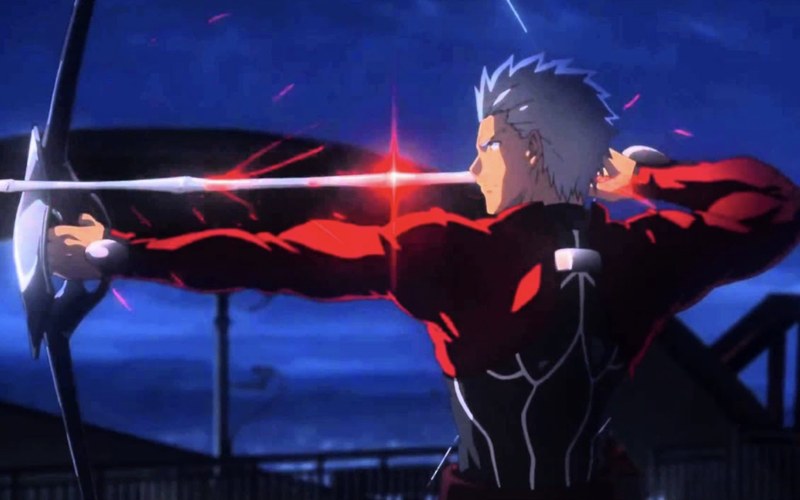
| Projected Composite Bow — Archer | Recurve, anchor past ear | N/A (projection) | 6.0 | Draw-to-ear anchor exceeds standard cheek/jaw anchor, destabilizing vertical grouping |
| Kojaku — Uryu Ishida | None | N/A | 1.9 | No anchor point, no draw cycle, no functional accuracy mechanism to evaluate |
Kikyo vs. Uryu Ishida: Two Opposite Case Studies in Anime Archery Form
Kikyo and Uryu Ishida sit at almost opposite ends of the AFEI scale, and the reason isn't art style — it's whether the character has a physical draw cycle at all. One does. One doesn't. That single difference explains most of the 49-point gap between them.
Case Study A: Kikyo (InuYasha) — AFEI 68.5

Run against the International Kyudo Federation's Hassetsu, the eight-stage kyudo shooting sequence, Kikyo clears most of the checklist. Ashibumi (footing) and dozukuri (posture) both read correctly — she squares her stance before drawing, not after. Uchiokoshi (raising the bow) and hikiwake (drawing apart) both get full multi-frame sequences instead of a snap-cut, which is more patience than most action anime bother with.
Where it slips: yugamae, the readying stage that sets grip and hand position before the draw, is inconsistent — several scenes skip a visible yugake (the three-fingered shooting glove) entirely. And hanare, the release, plays too explosively; a correct hanare is a natural release that falls out of continued expansion, not a sudden snap.
⚠️ The Missing Yugake ProblemDrawing a traditional thumb-lock release without a yugake or thumb ring, under the 25–35 lb this bow's draw cycle implies, puts repeated hooking stress directly on the flexor pollicis longus tendon — the exact injury pattern documented in archery-related hand and forearm injury literature as flexor tenosynovitis. It's not dramatic on screen. It's the kind of overuse injury that shows up after the twentieth shot, not the first.
Full AFEI breakdown: Anchor Point 75 × 0.4 = 30.0 · Release Mechanics 60 × 0.35 = 21.0 · Grip & Torque 70 × 0.25 = 17.5 · Total = 68.5
Case Study B: Uryu Ishida (Bleach) — AFEI 19.25

Kojaku's core problem for a physics scorecard: there's no anchor point because there's no draw. Arrows form and release from a fixed hand position with no reference string pulled to a repeatable spot under the jaw or cheek. In real archery, that anchor point is what keeps vertical stringing tight shot after shot — remove it, and even a physically perfect bow would group like a shotgun pattern, not a cluster.
The second issue shows up in Uryu's stance rather than the bow itself: several combat poses show a fully locked, hyperextended bow-arm elbow. On a real bow, that's a textbook form fault — it puts the inner forearm directly in the string's path on release, which is how string slap lacerations actually happen, and it transmits shot shock straight into the elbow joint instead of letting a slightly bent arm absorb it.
Full AFEI breakdown: Anchor Point 15 × 0.4 = 6.0 · Release Mechanics 20 × 0.35 = 7.0 · Grip & Torque 25 × 0.25 = 6.25 · Total = 19.25
A pass across public Bleach and InuYasha discussion threads on Reddit and fan wikis turns up a pattern that lines up with the AFEI numbers above, not against them.
- Reddit/Discord sentiment: Threads discussing Uryu's Quincy powers focus almost entirely on the reishi mechanic and power scaling, rarely on his form — because there's no form to critique. Kikyo threads, by contrast, regularly note how "traditional" or "proper" her draw looks compared to other shows.
- Top praised feature: Kikyo's multi-frame draw sequences, cited repeatedly as standing out from the usual instant-nock-instant-fire anime shorthand.
- Common friction point: Debate over whether Kojaku "counts" as a bow at all, given it has no physical limbs — a fair question, and one this page's own AFEI score of 19.25 effectively agrees with.
Caladbolg II: What Would It Take to Actually Fire a Sword as an Arrow?
Treating Caladbolg II as a real projectile means running four numbers most anime never bother showing: kinetic energy, momentum, drag, and whether the thing would even fly straight without fletching. Three out of four say no.
First, a confession on methodology: Type-Moon never publishes an actual mass or velocity figure for Caladbolg II, so every number below is ArcheryEra's own illustrative estimate, built from a plausible mass for a projected long sword and a lore-consistent "faster than sound" launch speed — not a canon spec sheet. Treat this as a physics teaching exercise wearing a Fate/stay night costume, not a claim about what Type-Moon actually intended.
| Variable | Estimate Used | Formula | Result |
|---|---|---|---|
| Mass (m) | 2.5 kg — plausible for a projected long sword | — | 2.5 kg |
| Velocity (v) | Mach 3, illustrative "Broken Phantasm" launch estimate | — | ~1,020 m/s |
| Kinetic Energy | — | Ek = ½mv² | ~1.30 MJ (≈13,000× a 100 J hunting arrow) |
| Momentum | — | p = mv | 2,550 kg·m/s (≈950× a real arrow's ~2.7 kg·m/s) |
| Drag Coefficient (Cd) | Flat-blade cross-section, no fletching | bluff-body estimate | ~1.2–1.5 (a true arrow runs 0.1–0.3) |
| Spin Stabilization | No fletching present on screen | — | None — would tumble without magecraft holding the flight path rigid |
That 1.3 megajoule figure sounds absurd until you compare it directly — it's the kind of number that would make Heracles flinch, which, per the source material, is more or less exactly what happens. The momentum number tells a quieter story: nearly a thousand times a real arrow's momentum is genuinely closer to a light anti-materiel round than anything an archer has ever drawn a string on.
The drag coefficient is where the fiction actually breaks, and it's worth sitting with for a second. A flat-sided blade with no fletching is a bluff body, not a streamlined projectile — real-world Cd figures in that 1.2–1.5 range would bleed velocity fast enough over distance that Caladbolg II's hits-anything-at-any-range portrayal only works if Archer's own reinforcement magecraft is doing the aerodynamic job fletching would normally do. It's a clever narrative patch. It's also, mechanically, cheating — and I say that with genuine respect for how the scene reads on screen.
I've drawn a 70 lb recurve exactly once, as a teenager who badly overestimated what "70 lb" meant before the string was actually at full draw. That bow stores maybe 60–70 joules at release. Caladbolg II's illustrative 1.3 MJ isn't four or five times that number — it's a five-digit multiple of it, which is the fastest way I know to explain why treating anime bow physics as literal is a fun exercise and a bad reference for anything you're actually planning to shoot.
Every bow scored on this page traces back to a real archery category covered elsewhere on this site. The full mythological, fantasy and historical lineup — Gandiva, Failnaught, the English longbow — lives on the Famous Bow Names hub. If you want to check whether your own setup's numbers hold up better than Uryu Ishida's, run them through the Kinetic Energy & Momentum Calculator — same Eₖ = ½mv² formula used above, just with your real arrow weight instead of a projected Ulster Cycle sword.
Open the Famous Bow Names Hub → Open the KE & Momentum Calculator →Frequently Asked Questions
What is the most famous anime bow name?
Kojaku, Uryu Ishida's original Quincy bow from Bleach, and Caladbolg II, Archer's projected-sword arrow from Fate/stay night, are the two names that come up most in community naming discussions. Kojaku wins on raw recognition since it names an actual bow; Caladbolg II is technically the arrow, not the bow itself.
What type of bow does Kikyo use in Inuyasha?
Kikyo carries an asymmetric Japanese longbow styled on the real daikyu and the sacred azusa yumi (catalpa-wood bow) tradition. The show never gives her personal bow a unique proper name — that distinction in the series goes to a separate named artifact, the Sacred Longbow of Mount Azusa, which Kagome uses later in the story.
Can you dry-fire a fantasy bow like in anime without breaking it?
No. A real bow stores draw energy in its limbs and releases it into the arrow's mass on the shot; with no arrow to absorb that energy, it slams back into the riser and limbs instead, which is exactly how limb delamination and cracked risers happen. Reishi-formed or projected-energy bows like Kojaku dodge this problem entirely because they never store mechanical limb energy in the first place.
Why do anime archers pull the bowstring past their ear?
It reads as raw power on screen, but a real anchor point sits at the corner of the mouth or under the jaw — not the ear — because that's the position a shooter can find identically on every single shot. Anchoring past the ear stretches draw length beyond what most risers and arrow lengths are built for and makes that anchor point far harder to repeat shot to shot.
What real-world bow matches Uryu Ishida's Quincy bow?
None, directly — Kojaku and its upgraded form Ginrei Kojaku are built from reishi (spirit particles) with no physical limbs, no draw cycle and no anchor point, so there's no real bow class to map it to. The closest conceptual analog is a compound bow's stored let-off energy, minus the part where a compound bow still needs a physical string pulled to a physical anchor.
Is Kyudo archery accurate compared to modern target archery?
Kyudo prioritizes correct form and the eight-stage Hassetsu shooting sequence over pure scorekeeping, so competitive accuracy numbers aren't directly comparable to Olympic recurve or compound rounds. That said, practitioners who follow Hassetsu correctly — the same standard Tsurune's Minato Narumiya is drawn adhering to — post the most repeatable, lowest-form-error shots of any bow style covered on this page.
⚠️ Safety & Technical DisclaimerAvoid If: you're taking any draw-weight, dry-fire, or form guidance on this page as instruction for your own shooting. It isn't. Every figure above is a scene-based estimate applied to fictional characters for entertainment and physics-literacy purposes only.
Real high draw weights carry real joint and tendon injury risk — the flexor tenosynovitis pattern flagged in Kikyo's case study is documented in peer-reviewed archery injury epidemiology, not invented for this page. Dry-firing any real bow, traditional or compound, risks catastrophic limb or riser failure and should never be attempted. Get in-person form coaching before drawing anything above a light dojo weight.
Our Final Take: The anime bows that score highest on the AFEI aren't the ones with the biggest damage numbers — they're the ones some animator bothered to rotoscope off real kyudo or recurve form. Tsurune's daikyu and Chiron's Antares Snipe both clear 75 for exactly that reason; Kojaku scores 19.25 for the opposite one.
👉 Recommendation: Naming a character off an anime reference? Pull the etymology from the typology that fits your build — mythological for a lore-heavy campaign, kyudo terminology for a disciplined archer, energy-construct language if physical realism was never the point. Curious how your own real bow's numbers stack up against a fictional one? Run them through the KE & Momentum Calculator above.
Hey, what's up? Burak here. Archery addict, board game geek, Daft Punk fan.
Your turn
Join the Conversation
Think a different anime bow deserves a spot on this scorecard? Tell us which one and we'll run the AFEI numbers.