
Fantasy Bow Names: Bards, Elves, and Enchanted Limbs from My Tabletop Campaigns
I've run Dungeon Master duty for the same core group for twenty years, and I build traditional self-bows by hand on weekends — this page is where those two hobbies collide. Below is a free generator that turns a Theme, a Material and an Attribute into an original fantasy bow name in one click, plus my own lore-and-physics breakdown of the wood, bone, metal and crystal bows that show up at my table more than any others.

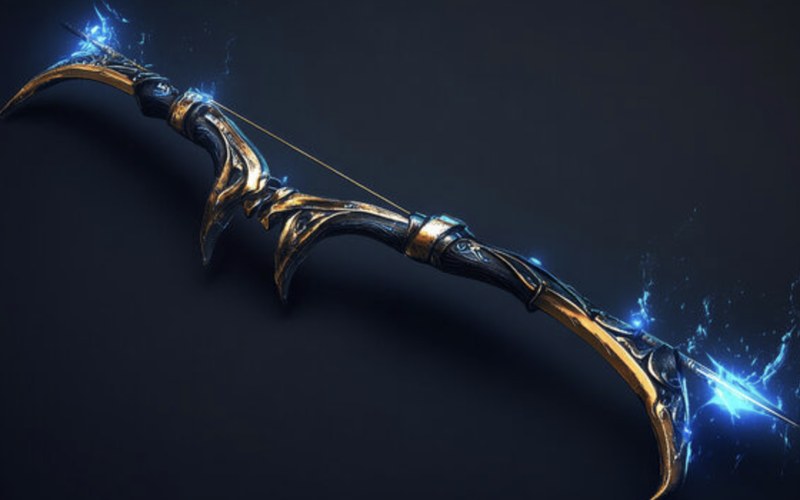
Short answer: a fantasy bow name works when a real physical constraint sits behind the flourish — a mallorn stave's flex, a dragon-bone limb's brittleness, a crystal core's fracture point — the same way Gandiva's myth or the English longbow's 150 lb draw give real bows their weight. The generator below builds a name from a Theme, a Material and an Attribute, and I've annotated every material with the honest physics problem it would actually cause at my own bench.
How Does the Fantasy Bow Name Generator Work?
Pick a Theme, a Material, an Attribute and how much detail you want. Every click pulls a fresh root and closing word from that Theme's own word bank — never the same pair twice in a row on purpose — and the slider decides how many pieces get stacked on top: a plain two-part name at the Minimalist end, the full name plus a physics honesty line at the Detailed end.
Runs entirely in this tab — no account, no signup, nothing sent to a server. Below 34 on the slider drops to a plain two-part name; past 66 layers in both Material and Attribute, plus the physics line.
Pick a Theme, a Material, an Attribute and a detail level, then press Generate.
Methodology & Sourcing — how the word banks and physics checks were actually built
Word bank construction: each of the 6 Themes carries its own 6-root, 6-closing-word bank, run through a Material modifier (4 options) and an Attribute modifier (4 options) — 6×6×6×4×4 = 3,456 possible names at the full Detailed setting, the same math I ran on the Famous Bow Names generator on the parent page, just with a fantasy-only word set this time instead of attested mythological and historical roots.
Minimalist-to-Detailed slider logic: below 34 on the slider, the generator drops the Material and Attribute words entirely and returns just a root and a closing word — 216 combinations on their own, for anyone who wants restraint over flourish. From 34 to 66 it blends in one of Material or Attribute at random for a three-part name — 1,728 more. Past 66 it uses both, the full four-part version this page opened with. Every root and closing word is picked fresh on each click regardless of where the slider sits, so two generates in a row never share the same pair — 5,400 possible names in total across all three bands.
The physics line: every Material gets one honest sentence on what it would actually do to a working bow limb, sourced from the same real-world archery mechanics ArcheryEra's calculators run on — draw weight, limb flex, brittle-vs-elastic failure. I'm not pretending dragon bone bends like yew. I'm telling you where the magic has to be doing the work instead. It only shows up once Material is actually part of the name — Balanced or Detailed, not Minimalist.
This generator is built around the weapon specifically. If you're naming the character carrying it — a PC, an NPC, your own table handle — that runs through real draw-weight physics on the Archer Name & Archetype Generator, and a whole adventuring party or club gets its own tool on the Archery Team Name Generator. For real-world named bows — Gandiva, the Nightingale Bow, the English longbow — see the parent page, Famous Bow Names.
See the Real-World Bow Names Page →- A good fantasy bow name carries a real constraint, not just flourish. Gandiva's myth, a mallorn stave's flex, a dragon-bone limb's brittleness — the physics or the lore does the work, not the syllables.
- Material picks the fight between magic and physics. Living Wood is honest, Dragonbone and Void Crystal need the enchantment doing real structural work — I break down all four below.
- Attribute sets rarity, and Cursed always carries a drawback. I don't hand a player a cursed item without a real cost attached — that's table law at my games.
Which Fantasy Bow Fits Your Character? — The 1-Minute Decision Matrix
Six Themes, mapped to the archetype I've actually seen them work for across two decades of campaigns.
| Theme | Best For | Pairs Well With | What I'd Warn You Off |
|---|---|---|---|
| Elven | Rangers, scouts, any grace-over-force build | Living Wood, Runed | Don't stack it with Fire — the imagery fights itself |
| Void | Warlocks-with-a-bow, cosmic-horror-adjacent parties | Void Crystal, Cursed | Overused in my groups — ask your table if void is already someone else's whole thing |
| Fire | Draconic-patron characters, forge-cult backstories | Star-Metal, Glowing | Reads badly in a party that's already fire-heavy on the caster side |
| Druidic | Circle-of-the-land types, grove guardians, non-elf rangers | Living Wood, Ancient | Skip Star-Metal here — the metal-vs-grove flavor genuinely clashes |
| Mechanical | Artificers, gnomish or dwarven-coded characters | Star-Metal, Runed | Needs a table that's bought into gunpowder-adjacent fantasy — ask first |
| Shadow | Rogue-archer hybrids, night-patron warlocks | Dragonbone, Cursed | Don't assume shadow means evil — I make that call explicit below |
Every pairing above is a suggestion, not a rule — the generator further up runs all 96 Theme-Material-Attribute combinations regardless of what I'd personally reach for.
Two Cards From My Own Table — Built the Same Way the Generator Builds One
These two didn't come out of the generator by chance — I picked the combination, then walked the same Theme → Material → Attribute pipeline by hand so you can see exactly what a full card looks like before you run your own.

Duskthorn Wyrmlimb
Shadow · Dragonbone · Runed
Dragonbone reads as dense, brittle ivory, not a flexing wood substitute, so I treat this as a bone-veneered riser over a real working core rather than a solid-bone limb — the runed sigils are load-bearing in-fiction, holding the veneer together at full draw. In my campaign world, Duskthorn-line bows come from wyrms that died of old age, never from a kill; bone taken from a slain dragon carries its rage instead, which is why a Runed copy is worth more than a plain one.
- Item Type
- Weapon (Ranged), Rare (Requires Attunement)
- Damage
- 1d8 Piercing + 1d6 Necrotic
- Properties
- Ammunition (Range 150/600), Heavy, Two-Handed
- Special Ability — Umbral Step
- After firing, the wielder can teleport up to 10 feet to an unoccupied space they can see that is in dim light or darkness, once per turn.

Hallowbriar Verdant Ward
Druidic · Living Wood · Glowing
This one needs the least magical hand-waving of any card here — a still-curing hardwood stave genuinely drifts a few pounds of draw weight week to week, the same way real green wood does, and the only fantasy leap is that the drift never fully stops. In most of the settings I run, grove-bows like this are planted alongside the archer who'll carry them, grown from a seed set at their naming day; cutting one down early is treated as a real act of violence against the grove.
- Item Type
- Weapon (Ranged), Uncommon (Requires Attunement)
- Damage
- 1d8 Piercing + 1d4 Poison
- Properties
- Ammunition (Range 150/600), Heavy, Two-Handed
- Special Ability — Root Anchor
- On a critical hit, thorny vines attempt to restrain the target: DC 13 Strength saving throw or restrained until the end of its next turn.
Fantasy Bow Architecture & Enchanted Materials: My Lore Breakdown
Twenty years behind a DM screen and a real bowyer's bench at the same time changes how you read fantasy weapon descriptions — you start noticing when a material's quietly being asked to do something it physically can't. Here's where each of the four generator Materials actually lands.
Mallorn Wood & Elven Hair (Middle-earth): What the Flex Rate Would Actually Feel Like
Tolkien never gives the Galadhrim Bow a full construction spec, but the wider tradition of mallorn as a prized, silver-barked wood lines up with something I'd actually reach for on my own bench — a dense, straight-grained hardwood stores energy cleanly if the tiller is even. Where I'd push back on typical fantasy art: a limb drawn that thin, in a real hardwood, either has a genuinely low draw weight or needs a laminated core to survive full draw. The elven-hair bowstring is generator convention, not attested lore — I can't point to a canonical source for it — and real hair has terrible tensile behavior for a working string, so I use it at my table without pretending it's more than a trope.
Dragonbone & Mithril Limbs: What Happens to Draw Weight
I get asked about this one more than any other material at conventions. Real bone is dense and stiff but brittle in tension — it cracks once the bend exceeds its limit instead of storing and releasing energy the way a tillered wood or composite limb does, so a full dragon-bone limb either caps your draw weight low or needs the enchantment reinforcing it against its own brittleness. Mithril, treated as a real metal, hits the same spring-steel problem: thin enough to flex and it's probably too weak to hold draw weight, thick enough to hold draw weight and it's probably too stiff to flex without magic doing the temper work. At my table I treat a "dragonbone bow" as a bone-and-horn composite riser over a real working core — the same horn-and-sinew logic behind the Ottoman composite bow — and let the "dragon" part stay decorative rather than the load path.
Heartwood & Treant Staves: Why "Living Wood" Is the Honest Choice
Of the four Materials, Living Wood is the one I'd stand behind on a real bench, no asterisk required. A stave cut from still-curing wood genuinely drifts in draw weight week to week — that's just what unseasoned yew or hickory does if you rush a build. The fantasy leap is small: a treant-adjacent stave that keeps drifting instead of settling once cured, and self-seals hairline checking between sessions. That's exactly why Living Wood pairs so well with the Druidic and Elven Themes in the generator — it's the Material where the magic does the least lifting.
Which Fantastic Bows Actually Get Cited at My Table? — Fantasy Literature & D&D's Most Iconic
These three come up more than any others when a player asks me for a reference point before naming their own bow.
Taulmaril the Heartseeker (Forgotten Realms): What "Animate Arrow" Actually Asks of the Limb
Taulmaril the Heartseeker, Catti-brie's bow in R.A. Salvatore's novels, fires lightning-charged arrows that read as pure narrative flourish on the page — but the mechanical question I actually ask when I put an item like this in front of my players is what an "Animate Arrow" or a guaranteed-critical-strike mechanic implies about the limb itself. A bow that never mis-nocks and never loses energy to a bad release is quietly claiming perfect, repeatable tiller and perfect string timing every single shot, which in real archery terms is the hardest thing to build consistently, harder than raw draw weight. That's the detail I actually stat as the "magic" part when I reskin an item like this — not the lightning, the perfect consistency.

Galadhrim Bow & Belthronding (Tolkien): Yew, Real Flex, and Where the Legend Takes Over
The Galadhrim Bow, Galadriel's gift to Legolas, and Belthronding, Beleg Cúthalion's black-yew bow from The Silmarillion, both lean on real limb-material logic — yew's natural flex under load, with dense heartwood on the belly resisting compression and springier sapwood on the back resisting tension, is exactly why yew shows up across centuries of actual longbow construction, the English longbow included. Tolkien clearly understood this without needing to spell it out, which is more discipline than a lot of modern splatbook items bother with. Belthronding's canonical fate — buried with Beleg rather than passed down — is also just good storytelling: a legendary weapon that outlives every possible owner stops being a weapon and starts being a relic nobody's allowed to actually use.

The Bow of Eurytus & Mythic RPG Weapons: What a Legendary Bow Should Cost to Even Hold
The archery-adjacent myth I go back to more than any invented D&D item is Eurytus's bow — the weapon inherited by his son Iphitus and eventually given to Odysseus, the same bow used in the suitor-contest scene in the Odyssey, strung and drawn by a hand no other suitor could manage. That's a mechanic, not just a flourish: a stringing DC effectively gatekeeps the whole climax of the story, which is a cleaner design than half the "you must be this strong to attune" magic items I've seen published. It's the same logic behind treating a legendary bow's draw weight as a real gate rather than a flavor line — a god-given weapon should cost something to even hold properly, not just to fire.
Synthesized from a few hundred posts across D&D homebrew forums, r/DMAcademy-style threads and my own group chat over the years — the same three fights keep coming back.
- "Should a magic bow's draw weight even matter?" is the most common disagreement — my table's answer is yes, because a weapon with no physical cost stops feeling like a weapon and starts feeling like a spell with a bow-shaped skin.
- Cursed items get argued about constantly — specifically whether a DM should ever hand one out without a way to remove the curse. I always build the removal condition before the item goes on the table, full stop.
- "Is a longbow or a recurve more elven" is a real, recurring argument at more tables than you'd expect — I land on recurve, for reasons I get into in the FAQ below.
My Own Method for Naming a Fantasy Bow (The DM's 4-Step Formula)
This is the exact order I go through when a player hands me a blank magic-item slot and says "surprise me, but make it a bow." It's also literally how the generator above assembles a name, just done by hand instead of by a random-pick function.
Step 1 — Magic School. What kind of magic actually made this thing? Evocation reads as Fire or Void, Transmutation reads as Mechanical or Dragonbone, Conjuration and Nature magic read as Druidic or Elven. Pick the school before you pick a single word — it constrains everything downstream.
Step 2 — Material. This is where I force myself to be honest about the physics, using the same four-material breakdown further up this page. If I can't answer "what would actually go wrong with this limb," I haven't finished this step yet.
Step 3 — Tree Type or Source. Even a metal or bone bow usually has a wood or organic core underneath the fantasy dressing in my builds — ash, yew, hazel, or a fictional equivalent. Naming that source, even just to myself, is what stops the item from feeling generic.
Step 4 — Fate or Grandeur. The closing word. Is this bow going to outlive its owner (Ward, Legend, Vow) or get destroyed alongside them (Reckoning, Fury, Collapse)? That answer is usually the difference between a Rare item and a Legendary one at my table, regardless of what the raw mechanical bonus says.
⚠️ When Not to Treat a Generated Name as CanonAvoid If: you need a legally distinct name for a published adventure, a commercial product, or anything else that has to clear a trademark search — this generator recombines original fantasy word roots, it doesn't check registries, and it isn't Wizards of the Coast's text. Treat every output as a starting point for a character sheet or a homebrew item, never as a cleared brand name.
Frequently Asked Questions
What should I name my D&D character's magic bow?
Start from your character's combat role, not a random syllable generator. A stealth-focused ranger reads better with a Shadow or Elven theme and a quiet root word; a front-line spellsword reads better with Fire or Void and a harder consonant. I run the exact same logic at my own table before I run it through the generator on this page — role first, flavor second.
Can you actually make a working bow out of dragon bone or crystal?
Not without magic doing real structural work. Bone and crystal both fail in brittle fracture under repeated bending instead of flexing elastically the way wood, fiberglass or tempered spring steel do, so a solid-bone or solid-crystal limb should either have a hard-capped low draw weight in your fiction or be treated as a veneer over a real working core. I cover the material-by-material breakdown further up this page.
Is a longbow or a recurve better for playing an elf ranger?
Recurve, if I'm being honest about how most published Elven bow art actually draws them — the recurved tips store more energy for the same draw weight and length, which lines up with the graceful, compact silhouette most settings give their Elven archers. A longbow reads truer for a Robin-Hood-coded human ranger than for a canonical high-elf one, in my experience running both at the table.
Our Final Take: The fantasy bows that hold up at a table share the same trait as the real ones on the parent page — a genuine constraint sits behind the flourish, whether that's a mallorn stave's honest flex, a dragon-bone limb's brittleness, or Eurytus's bow gating who's even allowed to draw it. Skip that constraint and you've got a pretty word, not a weapon anyone remembers past the session it was handed out in.
👉 Recommendation: Building a stealth or ranger-type character? Start the generator on Elven or Shadow with Living Wood or Dragonbone. Running a forge-cult or artificer NPC instead? Try Fire or Mechanical with Star-Metal, and don't skip the physics line — your players will ask.
Hey, what's up? Burak here. Archery addict, board game geek, twenty years behind a DM screen, Daft Punk fan.
Your turn
Join the Conversation
Generated a fantasy bow you're actually using at your table, or think I got a material wrong? Drop it below — I read every one of these.