
Famous Bow Names: The Complete Guide to Mythology, Fantasy, Games & History
A bow, on this page, means the archery weapon — not a hair accessory, not a violin part. Famous bow names split cleanly into five lineages: Hindu-epic mythology (Gandiva, Sharanga), high fantasy and D&D (Taulmaril, Belthronding), video games (the Nightingale Bow, Thori'dal), pop culture (Hawkeye's recurve) and documented history (the English longbow, the Ottoman composite bow). Below is the full breakdown of all eighteen legendary bow names, plus links to two free interactive name generators — one covering all five real-world lineages, one built purely around high-fantasy and D&D lore.

Short answer: the most cited famous bow names split into five traceable lineages — Gandiva and Sharanga from Hindu epic, Taulmaril and Belthronding from high fantasy and D&D, the Nightingale Bow and Thori'dal from video games, Hawkeye's recurve from pop culture, and the English longbow and Ottoman composite bow from documented history. ArcheryEra's free Bow Name Generator runs the same idea forward: pick a lineage, set a Temperament and an Elemental Spirit, and get an original name assembled from a 70-root word bank — not a random fantasy-syllable shuffle.
This generator is built around bow lore specifically. Naming the archer carrying it — a character, a gamertag, your own range handle — runs through the same draw-weight physics on the Archer Name & Archetype Generator, and a whole club or league gets its own six-slider tool on the Archery Team Name Generator.
Open the Archer Name Generator →Jump to a Bow Names Category
I've split everything I know about famous bow names across seven pages under this hub — documented history, myth, games, fantasy, fiction and anime, plus two free generators built right into the Fantasy and Bow Name Generator pages. Pick a lineage below and I'll send you straight to that page's full catalog of legendary bow names and famous bow and arrow names, or keep scrolling for the 1-minute comparison first.
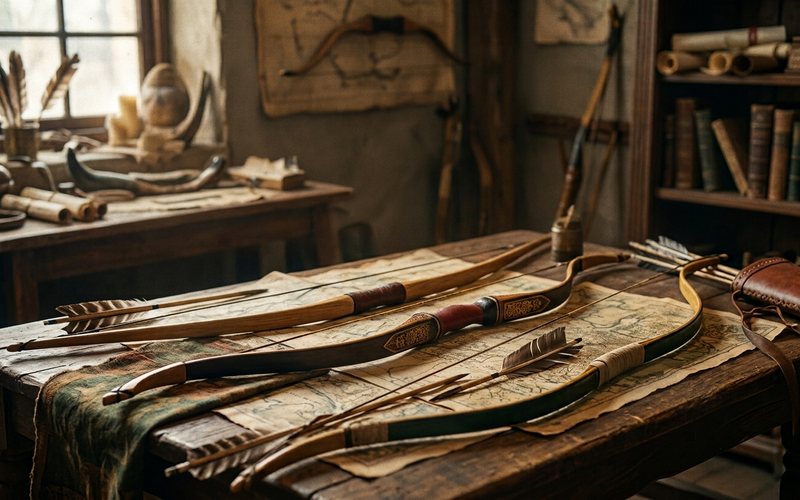
Historical Bow Names & Legendary Warfare
Real draw weights and construction behind the English longbow, the Ottoman composite bow and the Japanese yumi, cited to primary sources.
Read History →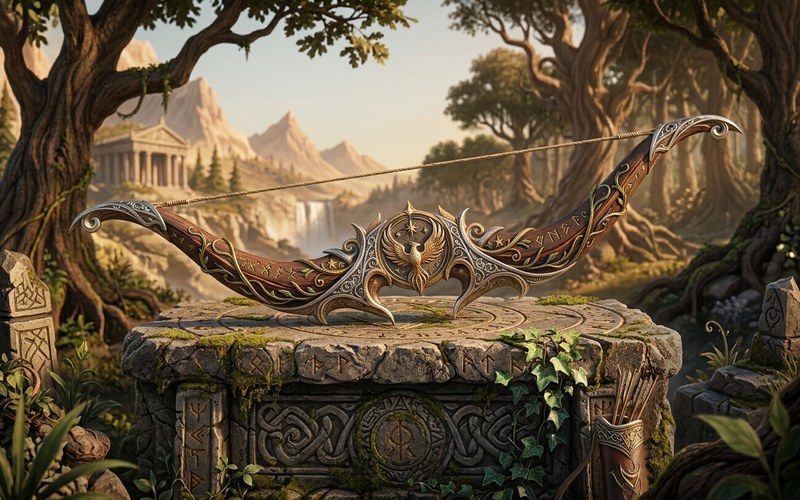
Mythological Bows & Physics
Gandiva, Pinaka and the Bow of Odysseus run through real stored-energy physics and a proprietary Mythic Draw Plausibility Index.
Read Mythology →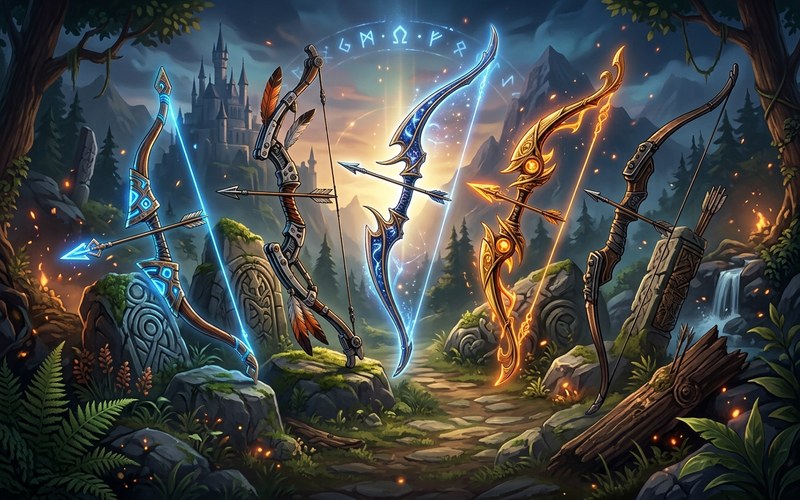
Video Game Bow Names
Eighteen named bows across Skyrim, World of Warcraft, Elden Ring, Zelda and Destiny 2, broken down by stats and how each one is earned.
Read Video Games →
Fantasy Bow Names
Elven, Void, Dragonbone and Living Wood bow lore, plus a Minimalist-to-Detailed generator built from twenty years behind a DM screen.
Read Fantasy & D&D →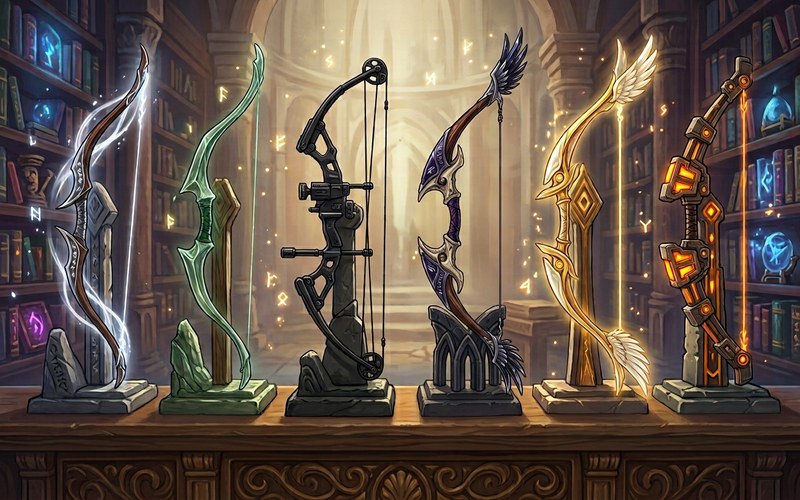
Fictional Bow Names
Eleven bows from Middle-earth, D&D and pop culture — the Galadhrim Bow, Taulmaril, Hawkeye's recurve and more.
Read Fictional →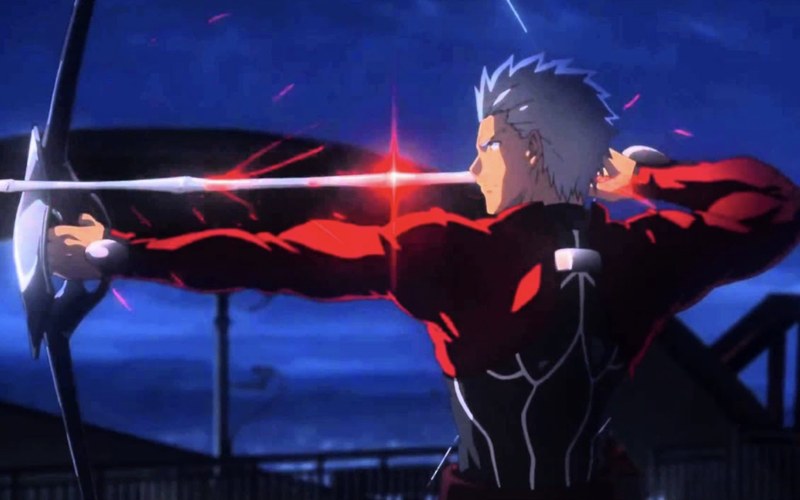
Anime Bow Names & Physics
Six anime bows, from Kikyo's sacred longbow to Minato's daikyu, scored against real archery form with ArcheryEra's AFEI metric.
Read Anime →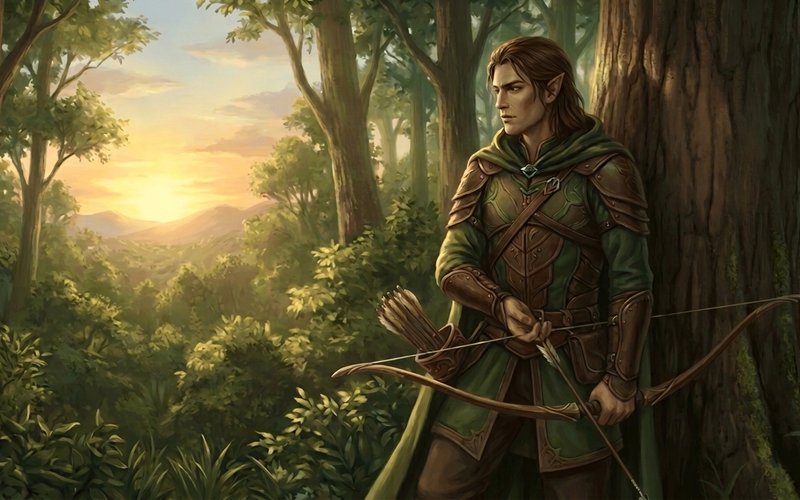
Bow Name Generator: 224,000+ Combinations
Five real-world lineages, a Temperament dial, an Elemental Spirit dial and a Minimalist-to-Detailed slider — set the controls and I'll hand you an original bow name in one click, methodology and decision matrix included.
Open the Generator →1-Minute Bow Names Comparison
I keep noticing the same thing across every category below: some famous bow names ride on one legendary weapon, others on a naming pattern I've seen repeated across dozens of bows. Here's how the seven lineages stack up before you dive into any single page.
| Category | Example Bow Names | Origin / Universe | Standout Feature |
|---|---|---|---|
| History | English Longbow, Ottoman Composite Bow, Japanese Yumi | Documented military & hunting history | Real Mary Rose draw-weight data, cited to primary sources |
| Mythology | Gandiva, Sharanga, Failnaught, Pinaka | Hindu epic, Norse and Arthurian legend | Mythic Draw Plausibility Index scores each bow's claimed draw weight |
| Video Games | Nightingale Bow, Thori'dal the Stars' Fury, Trinity Ghoul | Skyrim, World of Warcraft, Destiny 2 & more | Names built to match the in-game mechanic, not just sound cool |
| Fantasy & D&D | Taulmaril the Heartseeker, Galadhrim Bow, Belthronding | Forgotten Realms, Middle-earth | Free generator with a Minimalist-to-Detailed slider |
| Fictional | Hawkeye's recurve, Katniss's bow, Susan Pevensie's bow | Marvel, The Hunger Games, Narnia | The archer usually gets the fame — the bow rarely gets a proper name |
| Anime | Kikyo's Sacred Longbow, Chiron's Antares Snipe, Minato's Daikyu | InuYasha, Fate/Grand Order, Tsurune | Scored against real archery form with the AFEI physics metric |
| Crossbows | Zhuge Nu (repeating crossbow) | Han/Three Kingdoms-era China; Swiss legend (William Tell) | Almost never individually named — the archer gets remembered, the weapon doesn't |
Veteran Analysis of the 5 Core Bow Categories
Ten years of cataloguing bow specs on this site turns up the same pattern in every category below: the bows people actually remember pair one physical detail — draw weight, limb material, hand shock — with one piece of naming shorthand. Once you notice it, it's hard to un-notice. Here's how each of the five lineages does it, gripes included.
Mythological Bows: Gandiva, Apollo's Bow & Failnaught

Gandiva, Arjuna's bow in the Mahabharata, is described as unbendable by anyone else and effectively limitless in draw — a divine draw weight with no real-world ft-lb equivalent, which is exactly why this generator's Mythology category leans on Legendary Temperament rather than any specific number.
Sharanga, tied to Vishnu and wielded by Krishna, sits in the same tradition as Gandiva — a named weapon whose story matters more than any stated poundage. Fair or not, that kind of lore beats a spec sheet every single time.
Apollo doesn't get one single named bow the way Arjuna gets Gandiva, but he's the reason the Mythology category on this generator exists at all — the Greco-Roman archer-god behind an entire naming lineage, not just one weapon. Classical depictions like the one below, showing Apollo drawing on the serpent Python, are part of why archery-associated deities (Ullr, Skadi, Artemis, Apollo) feed this category's root list instead of a single invented word. Apollo doesn't get nearly enough credit in these roundups next to Artemis, considering how much naming work he's quietly doing here.

Failnaught is the myth-busting entry on this list: it shows up tied to the smith Wayland in Germanic-Norse legend and, separately, to Tristan in Arthurian romance. Two traditions, one "never-miss" naming convention — a useful reminder that a lot of famous bow names are less about one canonical bow and more about a naming pattern that keeps getting reused. It's a little maddening from a research standpoint — you want one clean answer, and mythology just refuses to give you one.
Video Game Bows: Nightingale Bow, Thori'dal & Trinity Ghoul
The Nightingale Bow in Skyrim rewards a stealth-focused Thieves Guild questline, and the name matches the mechanic — quiet, dark, sneak-damage-oriented. That's a design choice worth noting: the name was picked to match the in-game stat block, not the other way around, which is the same logic behind this page's Whisper Temperament setting. It's a small detail, but that kind of discipline is what separates a memorable in-game item from filler loot.

Thori'dal, the Stars' Fury sits at the opposite end — a legendary-tier World of Warcraft quest reward with a name built to sound like an event, not just an item. Grinding a loot table for hours to unlock a name like this is a familiar enough archery-adjacent gaming ritual that it's worth naming directly — RNG drop rates shape which of these names a player actually gets to say out loud.
Trinity Ghoul in Destiny 2 splits the difference: a compact, callable two-word name attached to a genuinely unusual mechanic (a chain-lightning arrow split). Say what you want about grind-heavy loot design, but a name earned that way sticks a lot harder than one handed out for free. The full eighteen-bow breakdown across all six franchises, stats and acquisition included, lives on its own page.
Fantasy Bows (High Fantasy & D&D): Taulmaril, Galadhrim Bow & Belthronding
Taulmaril the Heartseeker, Drizzt Do'Urden's bow in R.A. Salvatore's Forgotten Realms novels, fires lightning-arrows — a magical output that reads as Legendary Temperament in the generator on flavor alone.
The Galadhrim Bow, Galadriel's gift to Legolas in The Lord of the Rings, leans on real limb-material logic instead — yew's natural flex under load is the same reason yew shows up repeatedly in actual historical longbow construction.
Belthronding, Beleg Strongbow's black-yew bow from The Silmarillion, follows the same logic. Tolkien clearly did the homework here, which is more than can be said for a lot of modern fantasy world-building.

D&D's own treasure tables add generic magic bows — an Oathbow, a Bow of the Ram — that work more like the Temperament system on this page than like a single named legend: the mechanic defines the name's tone, and the dice decide which table result a given character gets stuck rolling for. Every table has that one player who rerolls until the name sounds cooler — completely understandable, arguably the correct move.
Fictional Bows (Pop Culture & Comics): Hawkeye, Katniss & Robin Hood
Hawkeye's recurve in the Marvel films is a real recurve riser-and-limb silhouette, not an invented sci-fi shape — trained archers worked as movement references on set, a detail covered in more depth on ArcheryEra's legendary-archers roundup.
Katniss Everdeen's bow in The Hunger Games follows the same design logic — tactical, riser-forward, built to read as gear rather than as a magic item.
Green Arrow's composite bow in DC comics follows the same pattern. That restraint is honestly refreshing in a genre that loves an unnecessary glow effect.

Robin Hood belongs in this lineup for the same reason: centuries of ballads and film adaptations, and no single bow of his ever gets an official name of its own — he's one of the archers profiled at more length here, worth reading if the folklore side interests you more than the naming pattern. None of the four — Hawkeye, Katniss, Green Arrow, Robin Hood — carries a single official proper name the way Gandiva or Taulmaril does, and that's the point worth flagging: pop-culture bows usually get identified by their archer instead of by the weapon itself, which is a genuinely different naming convention from myth and fantasy, not a gap in the research. If anything, it says something decent about these stories — the person mattered more than the prop. The full breakdown of these bows, plus Susan Pevensie's bow and Middle-earth's Galadhrim Bow and Belthronding, lives on Fictional Bow Names.
Historical Bows: English Longbow, Japanese Yumi & Ottoman Composite Bow
Bows recovered from the wreck of the Mary Rose put English longbow draw weights commonly around 100 to 150 lb — two to three times what most hunters draw today, and heavy enough that skeletal analysis of the archers themselves shows measurable bone adaptation.
The yumi, Japan's asymmetric bow used in kyudo and historically in mounted archery, grips below center — a design constraint from horseback use that has nothing to do with the myth-driven naming of Gandiva or Sharanga and everything to do with a horse's neck being in the way. Grip position sounds like a minor detail until you actually picture where a horse's head sits during a full draw.

The Ottoman composite bow, built from horn, sinew and wood, is a flight-archery specialist — short, recurved, and engineered for extreme cast distance over raw draw weight. That horn-and-sinew build is exactly the "composite" construction language the History category's word bank draws from, instead of inventing a foreign-sounding word with no attested source. Flight archery gets far less attention than it deserves — the engineering behind it is arguably cleverer than raw draw-weight bragging rights. The full civilization-by-civilization breakdown — Mary Rose load-testing, Okmeydanı's record stones, the Stele of Genghis Khan and more — lives on Historical Bow Names & Legendary Warfare.
A scan across public D&D character-build threads, gaming wikis and tabletop naming guides turns up the same three patterns this page's five categories already map to.
- Stealth and ranger-archetype builds skew toward soft consonants and nature imagery — Whisper, Hush, Ghost — almost never toward hard plosives.
- Heavy-hitter and war-bow builds skew toward blunt, compound-word naming — Bone-Crusher, Doomdraw — language that would read as excessive on a stealth character.
- Historical and myth-grounded campaigns skew toward real linguistic roots over invented syllables — a pattern the Mythology and History categories on this generator lean into directly.
Frequently Asked Questions
What are some cool names for a bow?
A strong bow name pairs a short, hard-consonant root with either an equipment term or a mythological reference — Gandiva, Nightbrand, Kinetic Ward. The pattern holds across real myth (Gandiva), games (Thori'dal) and fiction alike: one memorable root plus one physics- or lore-grounded modifier reads better than a random string of fantasy syllables.
How do I choose a unique bow name for D&D or gaming?
Match the name to the character's combat role before the setting: a stealth archer reads better with a Whisper Temperament and a Shadow or Frost Elemental Spirit, a heavy-draw fighter with a Fierce or Legendary Temperament and a Storm or Solar spirit. ArcheryEra's bow name generator ties that choice directly to those two dials, so the name's tone tracks the character's actual role instead of picking words at random.
What are some famous bows in mythology?
Gandiva, wielded by Arjuna in the Mahabharata, and Sharanga, tied to Vishnu and Krishna, are the two most cited Hindu-epic bows. In Western tradition, Failnaught appears in both Germanic legend, tied to the smith Wayland, and Arthurian romance, tied to Tristan — different retellings, same core idea of a bow that never misses. Shiva's Pinaka and the bow devotees associate with Apollo round out the tradition's best-known names, even though neither one ever settles on a single fixed proper name across every retelling.
How does real-world bow physics affect fictional bow naming?
Real draw weight sets a tone archers actually feel — a light stealth build reads soft and quiet, a heavy hunting or war-bow build reads blunt and forceful. This generator's Temperament dial, Whisper through Legendary, mirrors that same soft-to-heavy feel in word choice instead of a computed number, so a fictional name can carry the right weight without needing a KE readout attached to it.
What is the Norse name for a bow?
The Old Norse word for the bow itself is bogi, the same root as the modern English word bow. Norse mythology's clearest archery figure is Ullr, a god tied to the yew bow, skiing and winter hunting in the Eddas — but like Apollo's bow in Greek myth, no single Norse legend ever gives Ullr's bow a proper name of its own.
What are some famous bow names in history, games, and anime?
History's most famous bow names are less about one legendary weapon and more about a construction tradition — the English longbow, Ottoman composite bow and Japanese yumi. Games give sharper, single-item names instead: the Nightingale Bow, Thori'dal the Stars' Fury and Trinity Ghoul, broken down on Video Game Bow Names. Anime leans on mythological or elemental titles layered onto real archery form — Chiron's Antares Snipe and Minato Narumiya's daikyu, scored against real form on Anime Bow Names & Physics.
Are there famous crossbow names in legend?
Not in the way longbows or mythological bows get named. The best-documented case is Switzerland's William Tell, whose 14th-century legend has him splitting an apple off his son's head with a crossbow bolt — but even that story never names the crossbow itself, only the archer. The closest thing to a named crossbow type is China's repeating crossbow, popularly called the Zhuge Nu after the Three Kingdoms strategist Zhuge Liang, though most historians treat that attribution as tradition rather than settled record.
What are popular bow names in Minecraft?
Minecraft doesn't ship with a named legendary bow the way Skyrim or Destiny 2 does — the base item is simply called Bow, and enchantments like Power, Punch, Flame and Infinity change what it does, not what it's called. Anvil renaming lets players give a heavily-enchanted bow their own name, which is why player-made naming lists exist at all — but unlike the Nightingale Bow or Trinity Ghoul, none of it is built into the game itself.
⚠️ When Not to Treat a Generated Name as CanonAvoid If: you need a legally distinct handle for a published game mod, a commercial product, or anything else that has to clear a trademark search — the generator recombines real linguistic roots and coined words, it doesn't check registries. Treat every output as a starting point for a character sheet or a personal handle, not a cleared brand name.
Our Final Take: The famous bow names that stick share one trait regardless of category — a real physical or narrative constraint sits behind the word, not just a pleasing sound. Gandiva's myth, the Nightingale Bow's stealth stat and the English longbow's 150 lb draw are three completely different kinds of constraint, and all three work for the same reason.
👉 Recommendation: Naming a stealth or ranger-type character? Start the Bow Name Generator on Video Games or Fantasy & D&D with Temperament on Whisper and Elemental Spirit on Shadow or Frost. Building a heavy-hitter or a history-grounded campaign NPC instead? Push Temperament to Fierce or Legendary and try Mythology or History first.
Hey, what's up? Burak here. Archery addict, board game geek, Daft Punk fan.
Your turn
Join the Conversation
Generated a bow name you're actually using for a character or a handle? Drop it below — we like seeing what people build with this.