
Ancient Greek Archers: History, Deities, and Mythological Warfare

- Historical archers were paid specialists, not hoplites — Cretan mercenaries and a debated Scythian police force in Athens filled a gap the citizen-phalanx never covered, from skirmishing to crowd control.
- Apollo and Artemis are archery's actual gods in Greek religion, credited with inventing the bow itself; Apollo's arrows carry plague and prophecy, Artemis's carry the hunt.
- Mythological bow trials measure a hero's hidden right to power, not battlefield tactics — Odysseus's twelve axes and Heracles's Hydra-poisoned arrows are narrative devices with no equipment limits.
- Modern games keep the outline and drop the nuance: Total War's recruitable Cretan Archers track the historical record closely, while Assassin's Creed Odyssey and Hades borrow the names and iconography for gameplay, not accuracy.

Ancient Greek archers split into two categories that get blended together constantly online, and untangling them is the point of this page. The historical kind were professional soldiers — mostly Cretan mercenaries armed with composite bows, plus a debated corps of Scythian archer-police keeping order in Athens — hired because the Greek hoplite tradition never produced enough archers of its own. The mythological kind are gods and heroes: Apollo and Artemis, Heracles and Philoctetes, Odysseus stringing a bow no other man in the hall could bend. Hoplite culture publicly treated the bow as a coward's weapon, yet Sparta's own defeat at Sphacteria in 425 BCE happened precisely because light-armed missile troops beat elite hoplites outright. Below, I sort the verified record from the legend, section by section.
1. The Reality of the Bow in Ancient Greece: Stigma vs. Tactical Necessity
Archery in ancient Greece occupied a genuinely strange double position. Hoplite culture, built around the shield-wall phalanx, treated the bow as an ignoble weapon best left to slaves and foreigners — while the same city-states spent heavily on archer mercenaries the moment a siege, a rough hillside or a naval boarding fight actually demanded ranged firepower.
The hoplite ideal was a citizen-soldier standing shoulder to shoulder in the phalanx, trusting the man beside him and killing at spear's length, face to face. A bow let a man kill from cover, at range, without ever risking the close-quarters trial that Greek aristocratic culture treated as proof of courage. That framing shows up directly in Homer: when Paris wounds Diomedes with an arrow in Iliad Book 11, Diomedes doesn't so much as flinch — he turns around and humiliates him for it.
🗣️ Homer, Iliad, Book 11"Braggart, vainly boasting because you grazed my foot! Ah, pretty archer with curling hair and an eye for the girls. Face me man to man with real weapons and your bow and quiver will help you nothing. I no more note this scratch than if a woman, or a careless child had struck me. A weakling's shaft, a nonentity's proves blunt, while the spear from my hand, if it merely touches, bears witness to its sharpness, and floors its man."
— A. S. Kline's translation of Diomedes taunting Paris after being wounded by an arrow
I'll be honest, the first time I read that passage I laughed — it's a grown man getting shot in the foot and responding with what amounts to "that didn't even hurt, you coward." But it's not just trash talk. It's the whole hoplite value system in eight lines, and it's why nobody in a phalanx wanted to be caught holding a bow.
That's the cultural line, and it never really went away — but it didn't reflect how Greek armies actually won or lost battles. Psiloi, the unarmored light troops who included archers, slingers and javelin-throwers, screened the phalanx on rough ground, harassed flanks the hoplites couldn't reach, and did the close-in fighting during sieges and naval boarding actions where a nine-foot spear had nowhere to swing.
The clearest proof of that gap between stigma and necessity is the Battle of Sphacteria in 425 BCE, during the Peloponnesian War. Athenian general Demosthenes trapped more than 400 Spartan hoplites on an island and beat them with exactly the troop type Greek culture looked down on: roughly 2,000 archers and javelin-throwers picked the Spartans apart from a distance in 200-man squads, retreating whenever the heavier Spartans tried to close the gap. Thucydides records that 292 Spartans surrendered, 120 of them full Spartiate citizens — a result that, in Thucydides's own words, shook the Greek world, since Spartans were not supposed to surrender at all.
What makes the story sharper is that Demosthenes had already learned this lesson the hard way. A year earlier, in 426 BCE, his hoplite-heavy force was cut apart in the mountains of Aetolia by local javelin-throwers who simply refused to close to spear range — 120 of his 300 Athenians died, a catastrophic loss he only partly recovered from. The same general who nearly lost his career to missile troops without support built his Sphacteria victory around missile troops with proper backing. Archery didn't need to be respected to be decisive. It just needed to be used correctly.
The pattern holds at sea, too. A trireme's deck was too cramped for a real spear formation, so whatever weapon worked before enemy marines closed the gap got used by both sides — Persian ranks fielded dedicated archers as standard, and Greek crews carried at least a handful for exactly the same reason, even in fleets that would never have put a bow in a front-line hoplite's hands on land.
2. Historical vs. Mythological Archery: The 1-Minute Comparison Matrix
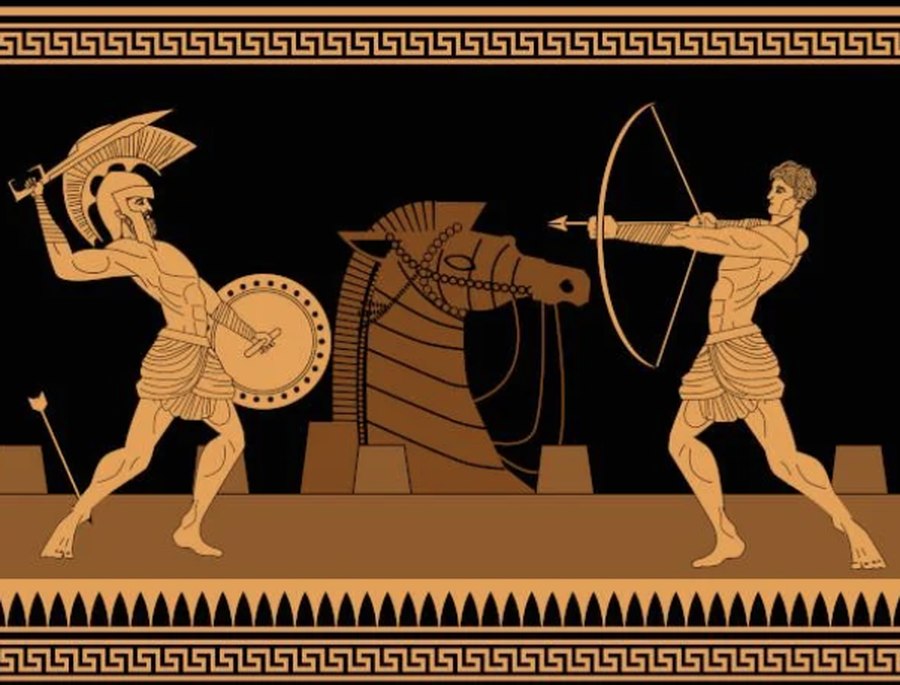
Four archer "types" get cited constantly in the same breath — Cretan mercenaries, Scythian city police, the divine twins Apollo and Artemis, and mythological heroes like Odysseus and Heracles. They don't belong on the same axis of comparison, which is exactly why the mix-up causes so much confusion. This matrix keeps them separated by what actually distinguished them.
| Attribute | Cretan Mercenaries | Scythian City Police | Apollo & Artemis | Mythological Heroes |
|---|---|---|---|---|
| Primary weaponry | Laminated horn-wood-sinew composite recurve bow | Disputed — a baton or whip is at least as well attested as a bow for daily duty | Golden or silver bow (Apollo); golden-shafted bow (Artemis) — materially undefined | Hydra-venom arrows (Heracles); an unnamed recurve bow gifted by Iphitus (Odysseus) |
| Battlefield / social role | Paid skirmisher and light infantry, hired by Athens, Sparta, Alexander and later Rome | Public slaves keeping order at the Assembly and Council — not battlefield combatants | Divine agents of plague, prophecy and the hunt, not a standing military force | Solo heroic feats; the bow proves identity and rightful authority, not army-scale tactics |
| Construction materials | Horn belly (compression) + sinew back (tension) + wood core, hide-glue lamination | No standard-issue weapon is securely attested | Unspecified, poetic ("gold," "silver") — no physical construction is ever described | Inherited or gifted weapons with no material specification beyond their myth |
| Lethal range | Comparable Iron Age composite bows reconstruct to roughly 150–250+ yard maximum range; effective combat range was far shorter | Not applicable — the role was crowd control, not ranged killing | Unlimited by narrative design; range is never specified because the weapon is symbolic | Same — Odysseus's shot through twelve axe-heads is measured in symbolic precision, not yards |
| Cultural perception | Valued for skill and mobility, still ranked below hoplites in social prestige | Played for comedy as a foreign "other" in Aristophanes; useful but not respected | Reverence — divine archery carries no stigma at all | Ambiguous — Paris is mocked for the bow, but Odysseus's mastery of the same weapon proves his kingship |
Laid out on a timeline, the split gets even clearer: mythic time has no fixed date at all, while the historical Cretan-archer tradition is a dated, documented record running roughly two thousand years end to end.
3. How Did Historical Greek Archers Actually Fight and Build Their Bows?
The Cretan composite bow is the closest thing ancient Greece had to a standardized archery weapon, and it was a genuinely sophisticated piece of engineering — a small, portable bow storing far more energy per inch of draw than a plain wooden self bow ever could.
The Cretan Composite Bow: Engineering Breakdown
A composite bow laminates three materials, each chosen for a different job. The belly — the side facing the archer — gets a thin layer of horn, which resists compression exceptionally well. The back gets sinew, oriented lengthwise, which resists being stretched. A wooden core sits between them holding the shape, the same horn-wood-sinew formula that recent archaeological analysis traces to a single Near Eastern origin before it spread east across the steppe. All three layers are bonded with hide or fish glue, and bowyers who've rebuilt the lamination process by hand report each curing stage running two to three weeks on its own, with the finished stave needing a further six months of seasoning before it's safe to string.
What that construction buys an archer is a shorter, more portable weapon that stores as much energy as a much longer self bow — a real advantage for a mobile skirmisher who needed to move fast between shots rather than plant and hold a static firing line.
Nobody should claim a precise historical draw weight for the Cretan bow with confidence, and I'd treat any source that does with suspicion — no surviving ancient Greek text gives a number. What exists instead are reconstructions of comparable Iron Age composite bows: an Assyrian-style rebuild lands around 42 lb, while Central Asian "Scythian-style" bows recovered from Yanghai test out at 80–140 lb, and the much later Ottoman war-bow tradition averages around 120 lb across a wide 40–240 lb range. A Mediterranean skirmishing bow, built light for speed rather than maximum punch, most plausibly sits toward the lower end of that spread.
Running the numbers on a modeled 50 lb Cretan-style bow with a 400-grain war arrow — plausible for a light Mediterranean skirmishing bow, not a documented historical figure — a traditional horn-and-wood bow at that weight typically produces roughly 150–160 fps. Using the site's standard ballistics formulas (KE = grains × fps² ÷ 450240, the same constants behind our Kinetic Energy & Momentum Calculator), that works out to about 21 ft-lbs of kinetic energy and roughly 0.28 slug-ft/s of momentum at the arrow.
Reconstructed Greek bronze bell-cuirasses run 0.8–1.4mm thick, and the armorers who study that thickness range describe it as "effectively proof against spears, arrows, and all but the most determined war hammer strikes." Twenty-one foot-pounds is a solidly lethal amount of energy against exposed flesh — in the same neighborhood modern bowhunters treat as a minimum for deer-sized game — but it's a poor match for quality bronze plate head-on. That's a mechanical explanation, not just a cultural one, for why ancient archers targeted gaps at the neck, thighs and underarms, unarmored psiloi, and cavalry, rather than trading shots with a fully armored hoplite's chest.
This is a simplified kinetic-energy model for comparison purposes, not a true penetration simulation — real arrow-vs-armor outcomes also depend on arrowhead geometry, impact angle and the specific alloy, none of which a single KE figure captures.
How Did Greek Armies Actually Use Archers in Battle?
Historical Greek armies used archers in three consistent roles: skirmishing ahead of and around the phalanx, defending or besieging fortified positions, and fighting aboard ships. None of those roles asked an archer to trade shots with a hoplite head-on — they asked him to hit what the phalanx structurally couldn't reach.
Against cavalry, archers and slingers gave a Greek force something to answer horse-archers with at range instead of only at spear's length — Xenophon records that during the Retreat of the Ten Thousand in 401 BCE, his own unarmored Cretan archers were actually outranged by Persian bows and slings, and the Greeks had to improvise a corps of slingers and cavalry to close the gap — a rare admission that "professional archer" didn't automatically mean "best-equipped archer" on every battlefield.
4. Deities of the Bow: Apollo & Artemis
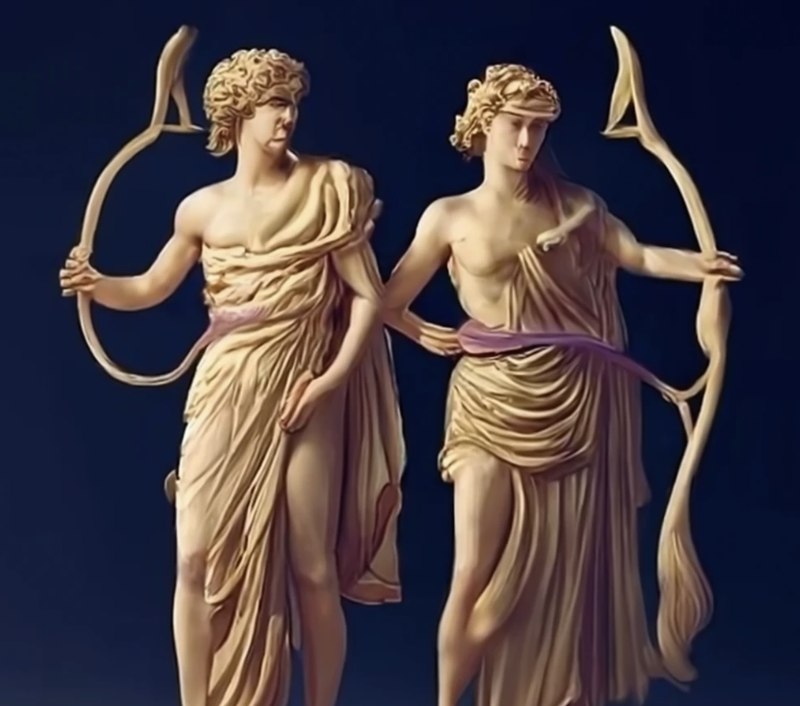
The main Greek gods of archery are the twins Apollo and Artemis, children of Zeus and Leto — ancient sources credit the pair with inventing archery itself, not just practicing it.
Apollo: The Golden Bow of Plague and Prophecy
Apollo carries a golden or silver bow, reflected directly in his epithets Argyrotoxus ("silver bow") and the "far-shooting" titles Hecaërgus and Hecebolus. His arrows aren't primarily a battlefield weapon — they're an instrument of sudden death from a distance, most famously as disease. The opening of the Iliad puts this on full display: after Agamemnon dishonors his priest Chryses, Apollo descends on the Achaean camp and fires plague into it from his bow.
🗣️ Homer, Iliad, Book 1"Down he came, in fury, from the heights of Olympus, with his bow and inlaid quiver at his back. The arrows rattled at his shoulder as the god descended like the night, in anger... he set down by the ships, and fired a shaft, with a fearful twang of his silver bow."
— A. S. Kline's translation of Apollo unleashing plague on the Greek camp
That's the pattern worth noticing: Apollo's archery is precision cause-and-effect at a distance he chooses, never a fair fight. Nine days of plague arrows accomplish what no army could.
Artemis: The Huntress's Bow
Artemis's bow is described through epithets like khryselakatos ("golden-shafted") and hekatebolos ("far-shooting") — her bow and quiver are her most consistent attribute across Greek art and text. Where Apollo's arrows carry plague and prophecy, Artemis's carry the hunt: she's protector of young animals and wilderness on one side, and a genuinely lethal shot on the other, killing Actaeon and the Niobides in myths where mortals cross her.
5. Mythological Archers & Legendary Feats
Where the gods use the bow as an instrument of distant judgment, mortal heroes use it as proof. Every major bow story in Greek myth is really a story about whether one specific person has the right to claim something — a kingdom, a war, a life.
Teucer, Meriones and Pandarus: The Archers Homer Actually Named
Most "mythological archers" roundups jump straight to the headline names — Apollo, Artemis, Odysseus — and skip the working archers Homer bothered to name individually in the Iliad. That's a mistake, because two of them connect the myth directly back to the history in Sections 1 through 3, in a way I don't see written up anywhere else.
Teucer, Ajax's half-brother, is the best archer on the Achaean side — he fights from behind Ajax's shield, popping out to shoot and ducking back, and Homer credits him with roughly thirty kills over the war. Meriones is a Cretan, second-in-command of the Cretan contingent under Idomeneus. At Patroclus's funeral games in Book 23, the two of them go head to head in an archery contest: a dove tied by a cord to a ship's mast. Teucer shoots first and only clips the cord, freeing the bird without killing it. Meriones takes the second shot, catches the dove in the air, and wins outright.
Here's the detail I actually find remarkable: Homer is composing this centuries before any Cretan mercenary ever drew a wage from Athens or Sparta, and he's already reaching for "the Cretan guy is a slightly better shot than the best Achaean" as a believable plot beat. Whether that's folk memory of Crete's real archery culture leaking into the epic tradition, or just a coincidence the later mercenary trade happened to make look prophetic, is genuinely unresolved — but it's too good a coincidence to leave out of a page about Cretan archers.
Pandarus, a Trojan-allied archer from Lycia, gets the single most technically detailed weapon description in the entire poem — more specific than anything given to a sword or a spear. It's worth quoting in full, because it's essentially a manufacturing spec:
🗣️ Homer, Iliad, Book 4"This bow was made from the horns of a wild ibex which he had killed as it was bounding from a rock... its horns were sixteen palms long, and a worker in horn had made them into a bow, smoothing them well down, and giving them tips of gold."
— Samuel Butler's translation, describing the bow Pandarus uses to shoot Menelaus and break the truce
Read that against Section 3's lamination breakdown and it lines up almost exactly: horn as the working material, a deliberate manufacturing process, a named craftsman doing the shaping. It's the closest thing to hard technical evidence anyone gets in Homer for the real composite-bow tradition sitting underneath the poetry — which is presumably why Pandarus's shot is also the one that restarts the entire war after a truce, not a coincidence a poet this careful would have missed.
Odysseus: The Trial of the Bow
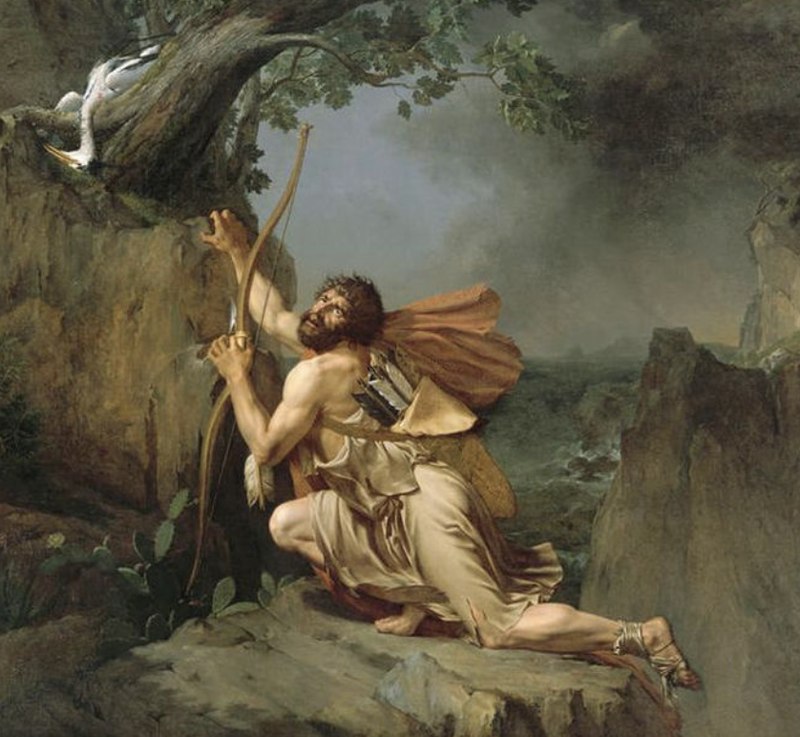
In Odyssey Book 21, Penelope sets Odysseus's own bow as the test for her suitors: string it, then shoot an arrow through the sockets of twelve axe-heads set in a row. Every suitor fails to even bend the bow. Odysseus, disguised as a beggar, strings it in one motion and puts the arrow clean through all twelve.
Physically, that's a bow he'd built his whole strength around — it's a gift from Iphitus, matched to Odysseus specifically, which is exactly why nobody else in the hall can draw it. Symbolically, it's the whole plot compressed into one action: the man who can still bend this bow is unmistakably the king who left twenty years earlier, and the axe-heads turn raw strength into a public, undeniable proof only he could pass.
Heracles & Philoctetes: The Hydra-Poisoned Arrows That Decided Troy
During his Second Labor, Heracles killed the Lernaean Hydra and then dipped his arrows in its venomous blood, making every shot from that quiver incurable afterward — a detail that comes back to haunt him personally later, when a dying centaur's blood, tainted by that same poison, eventually kills him.
Philoctetes inherited that bow and those arrows directly from Heracles, then spent ten years marooned alone on Lemnos with an unhealing wound after the Greek fleet abandoned him on the way to Troy. A prophecy revealed that Troy could not fall without Heracles's bow, forcing Odysseus back to fetch the man he'd helped abandon. Once healed, Philoctetes used that same poisoned bow to kill Paris — closing a loop the myth clearly wants you to notice: the war that started, in part, because of Paris's bow-and-arrow killing of Achilles ends with Paris himself dying to an arrow.
Paris vs. Achilles: The Myth vs. Reality Gap Most Sites Get Wrong
Here's a detail that trips up a lot of coverage of this exact topic: Achilles's death by an arrow to the heel isn't actually in the Iliad. Homer's epic ends before Achilles dies. The arrow, the heel, and Paris's role in it all come from later Greek and Roman sources — poems like the lost Aethiopis and later writers such as Quintus Smyrnaeus — some of which describe the arrow as guided by Apollo himself, and some as poisoned. It's an entirely legitimate, ancient part of the myth. It just isn't Homer's.
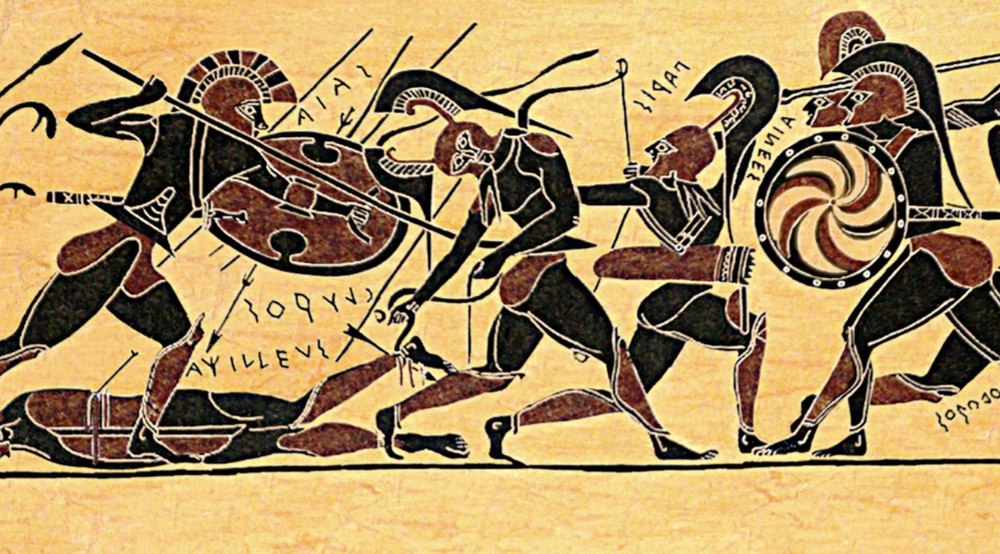
Watch for this claim specifically: plenty of pages describing Achilles's death cite it as an Iliad scene. The Iliad covers a few weeks of the war's tenth year and closes with Hector's funeral — Achilles is still alive on the last page. If a source treats the arrow-to-the-heel death as verified epic canon rather than later tradition, that's the tell that it's working from pop-culture summary rather than the actual text.
6. Pop-Culture & Gaming Accuracy Analysis
Games are where most people meet these figures first, and the accuracy varies enormously by title — from genuinely well-researched unit rosters to names borrowed purely for vibes.
Total War: Rome II — The Closest Match to the Historical Record
Cretan Archers exist as a real, recruitable unit in Total War: Rome II across multiple playable factions, including Rome, Carthage and Knossos itself — mechanically fast, fragile in melee, and outclassed at range by dedicated missile specialists, which lines up with the actual historical reputation: skilled, mobile, unarmored skirmishers, not front-line troops.
Assassin's Creed Odyssey — Real Setting, Compressed Timeline
Set during the Peloponnesian War (431–422 BCE), Assassin's Creed Odyssey puts its protagonist through a bow-centered skill tree — the game's setting overlaps directly with the era of Cretan mercenaries and the Sphacteria campaign discussed above. Where it drifts from the record is scale and speed: the game's mercenary protagonist single-handedly resolves conflicts a real war took decades and thousands of soldiers to settle.
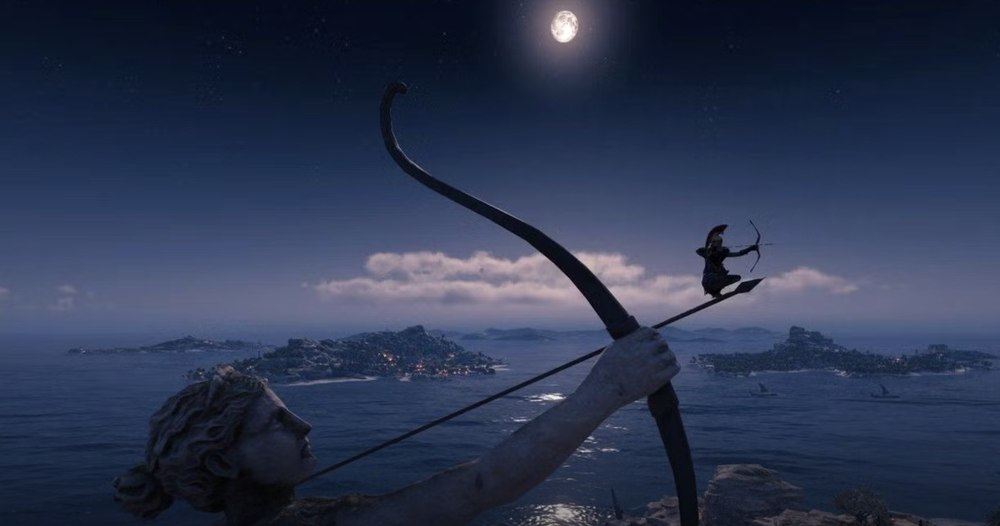
And I'll say the quiet part out loud: "Predator Shot," the slow-motion mid-air aim-correction ability, is nonsense — full stop. No composite bow, ancient or modern, gives you a free half-second of bullet time to walk an arrow onto a moving target. It's a fun ability. It's also exactly the kind of thing that turns into a "fact" in a Discord argument if nobody pushes back on it.
Hades — Mythology as Character Design, Not Simulation
Supergiant's Hades gives the player character the Heart-Seeking Bow, tied narratively to Artemis's boon system — the huntress identity carries over cleanly, but the weapon's homing-arrow mechanics are pure game design with no myth-physics pretension behind them at all.
Aggregated sentiment from strategy and history-gaming forums: Total War's faction-roster researchers get consistent credit in community threads for unit-level accuracy — the Cretan Archer entry specifically gets cited as a rare case of a game unit matching the primary-source reputation almost exactly.
Top praised feature: Assassin's Creed Odyssey's environmental recreation of Greek sites is frequently singled out as the strongest history-adjacent element, ahead of its combat mechanics.
Common friction point: history-focused players in these communities consistently flag the same complaint across all three titles — compressing a centuries-long, city-state-by-city-state reality into one hero's personal timeline, which is a narrative necessity these genres share, not a factual claim any of them are actually making.
7. Frequently Asked Questions
Who is the main Greek god of archery?
Apollo and his twin sister Artemis are both credited as the archery deities in Greek religion — ancient sources describe them inventing the bow together. Apollo's golden or silver bow is tied to plague, prophecy and sudden death from a distance, while Artemis's bow is tied to the hunt and the protection of wild creatures.
Were archers respected or looked down upon in ancient Greek warfare?
Both, depending on who's asking. Hoplite culture treated the bow as a lesser weapon — Homer has Diomedes mock Paris as a braggart who wouldn't survive a spear fight — yet city-states paid heavily for Cretan mercenary archers, and light-armed missile troops won real battles, including the Athenian victory over Spartan hoplites at Sphacteria in 425 BCE.
What made Cretan archers the most sought-after mercenaries in the Mediterranean?
Crete never developed a strong hoplite tradition, so its warrior class specialized in the composite bow instead, producing generations of skilled, unarmored skirmishers. Cretan archers served Athens, Sparta, Alexander the Great's campaigns, the Hellenistic successor kingdoms and Rome, up through the defense of Constantinople in 1453.
How did the Cretan composite bow differ from mythological bows?
The Cretan bow was a physical object built from horn, wood and sinew, with a draw weight modern reconstructions of comparable Iron Age bows place well under 100 lb — modest next to later Ottoman or Mongol war bows. Mythological bows like Apollo's golden bow or Heracles's Hydra-poisoned arrows answer to no material limits at all; they're narrative devices, not equipment. Our Mythic Bow Ballistics Calculator runs that comparison directly against four legendary bows if you want to see it scored.
The 21 ft-lbs figure in the case study above came straight out of ArcheryEra's own Kinetic Energy, Momentum & Pass-Through Calculator. Plug in a modern bow's draw weight and a modern arrow's grain weight to see how far actual archery equipment has moved past a Cretan skirmisher's kit — and how much of that gap is speed versus mass.
Open the Calculator →Our take: the "real" and "mythological" Greek archer are two different subjects wearing the same name. If you're chasing the historical record — units, tactics, engineering — the Cretan mercenary and the Sphacteria campaign are where the evidence actually is. If you're chasing the mythic throughline that shows up in games and fantasy fiction, Apollo, Artemis, Odysseus and Heracles's poisoned bow are the four figures every later archer-hero borrows from, directly or not.
👉 If you came here from a game or a fantasy read and want the numbers behind the myth, our Mythological Bows page runs Odysseus's own bow through the same ballistics model used above. If you came here for the military history, our Legendary Archers of All Time list places Cretan-style archers alongside the rest of the real and folkloric record.
Your turn
Join the Conversation
If you've dug into primary sources on Cretan archers, the Scythian police debate, or a mythology detail I got wrong, that's the most useful thing you could leave here — corrections get the page changed.